Category Archives: 資料

「慰安婦意見書撤回を求める請願」を拒否し続ける島根県議会

島根県議会が平成25年(2013年)6月26日 に可決した『日本軍「慰安婦」問題への誠実な対応を求める意見書』は、河野談話、米国下院決議121、国連人権委員会勧告を受け入れて日本政府に対応を求めるものでした。

この意見書の撤回にむけて、島根県の有志が請願を出し続けてきたのはこれまでもご紹介してきました。

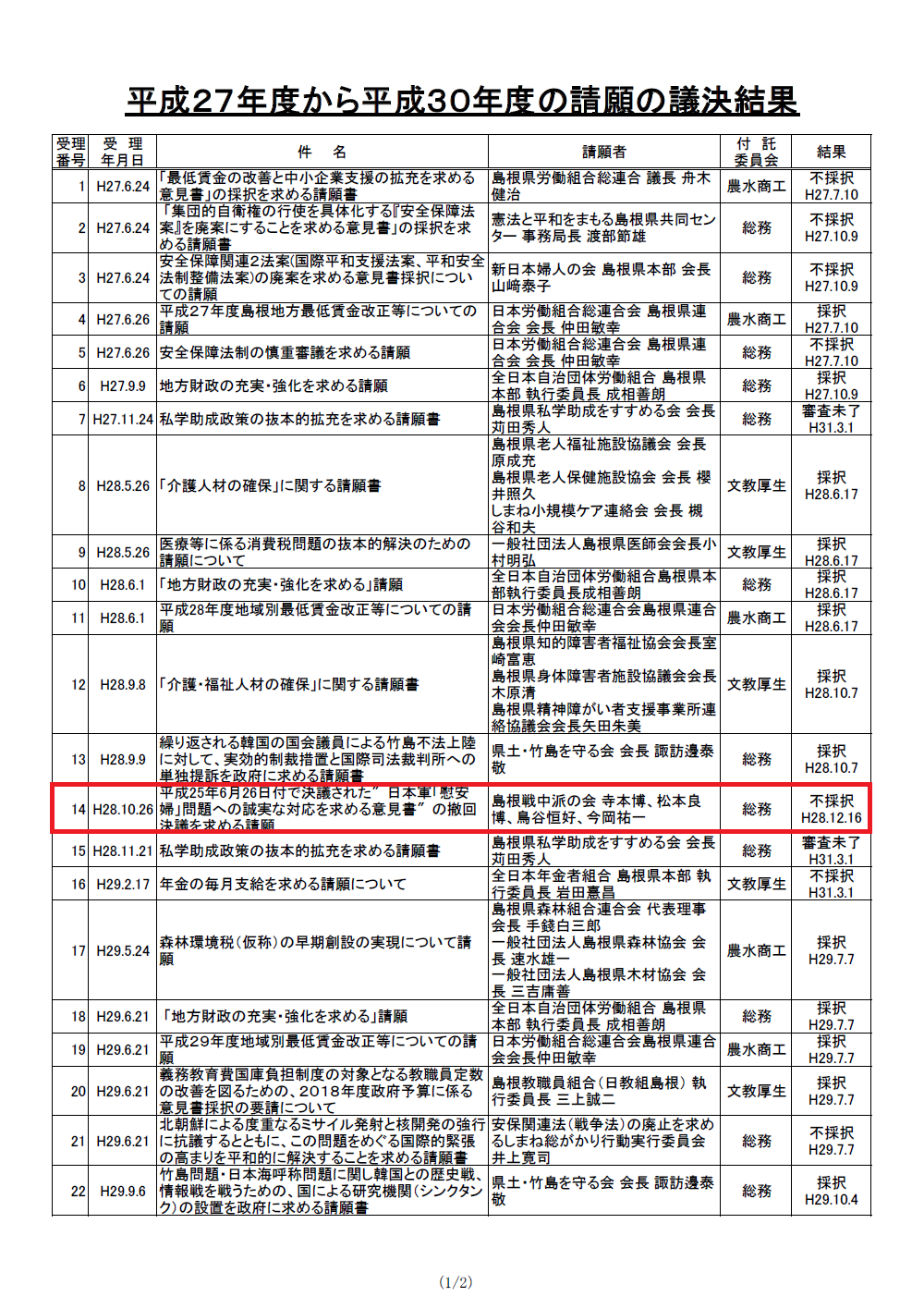
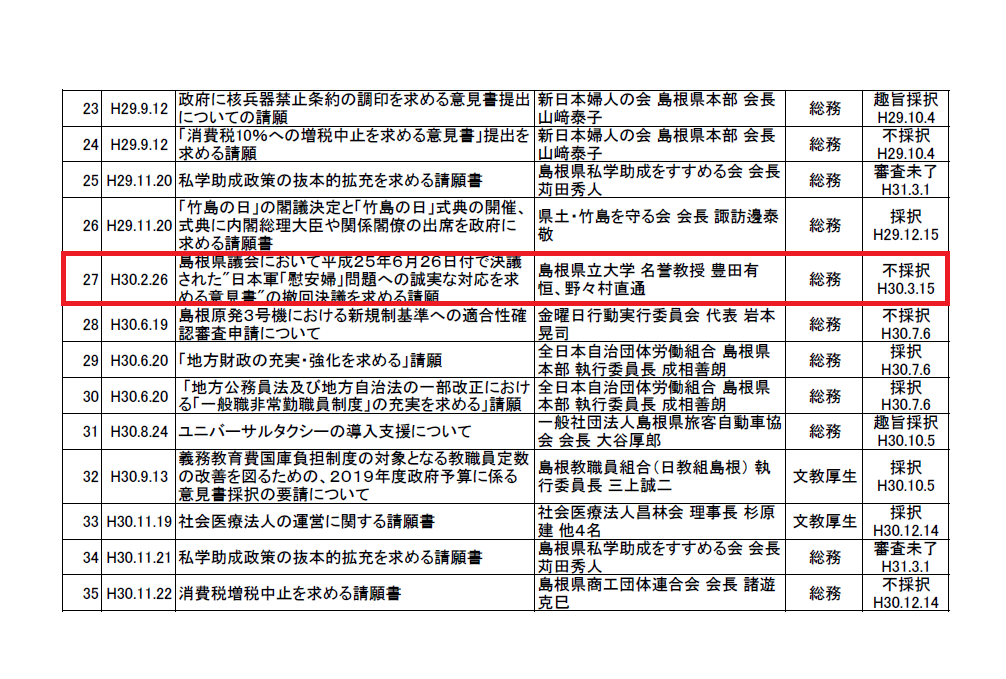
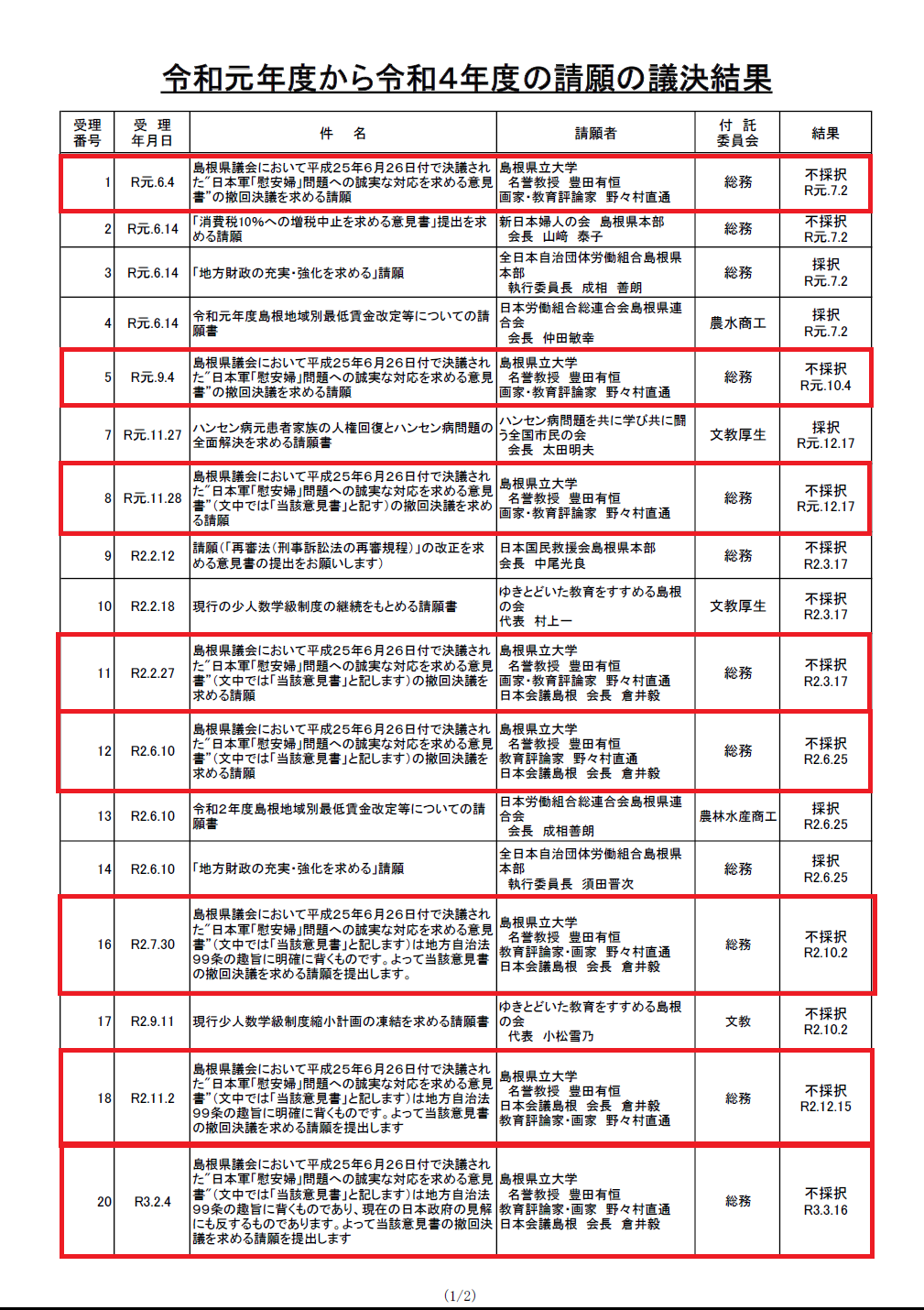
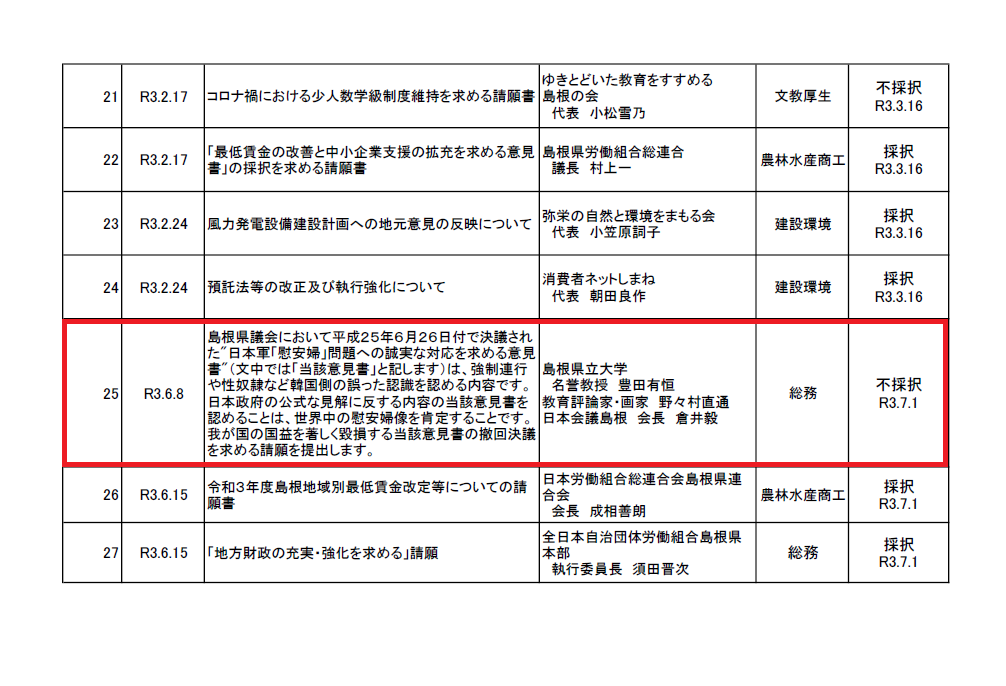
島根県議会は請願を不採択し続けていますが、議決結果の一覧で見ると分かりやすいので表をご紹介します。

赤枠が地元有志の方々が提出し、不採択にされた「慰安婦意見書撤回を求める請願」です。

島根県議会はいつまでこんな意見書を守り続けているのでしょうか。

有志に皆様の粘り強い取り組みには頭が下がります。

******************************************************************

◆ 平成27年度から平成30年度の請願の議決結果 【 PDF版 】

◆ 令和元年度から令和4年度の請願の議決結果 【 PDF版 】

Video Message from John Mark Ramseyer, Professor of Japanese Legal Studies at Harvard Law School / APRIL 24, 2021

EMERGENCY SYMPOSIUM ON THE INTERNATIONAL HISTORICAL CONTROVERSY OVER PROFESSOR RAMSEYER’S ARTICLE
SEIRYO KAIKAN
APRIL 24, 2021

Video Message from John Mark Ramseyer, Professor of Japanese Legal Studies at Harvard Law School

First of all, I would like to offer my heartfelt thanks to the International Research Institute of Controversial Histories and to Japanese Women for Justice and Peace for holding this symposium. I am also immensely grateful to the Sankei Shimbun for its generous support of the symposium, and to all of you for taking time out of your busy schedules to be here today.

In all honesty, I find myself at a loss for words. Never have I dreamed that so many distinguished scholars would assemble to hear me speak. I feel deeply honored.

However, it is quite obvious that I am not at the heart of the problem that must be resolved, nor is my eight-page article. This is not a simple matter of the harassment of an individual educator. It is a far more deeply rooted problem, and is of the utmost seriousness.

As I see it, the challenge we face is twofold: recounting the events of the past accurately, specifically, thoroughly, and in an unbiased manner, to the extent possible; and the protection, at all costs, of academic freedom. I hope I will be able to make a contribution, no matter how small, toward the achievement of these objectives. I am willing to make a concerted effort to fulfill even a small role in protecting academic freedom.

I have learned three lessons from this experience.

The first is the importance of relating facts as accurately as possible.

The first step toward resolving the problem that is today’s theme is describing the phenomena of the past as accurately as possible. I realize that this seems obvious, but when we write or present papers or articles, we must do so without bias, to the extent possible. If we are reporting news as it happens, we must do so without bias, to the extent possible. The same care should, again obviously, be taken when we are describing past events, but often this does not happen.

Returning to today’s theme, when we are writing about events that took place on the Korean peninsula in the 1930s, we should describe them accurately.

What prompted me to write the short article in question was my realization that much of what had been written in English about those events was untrue. The majority of the material I consulted was marred by Korean anti-Japanese bias. Moreover, I noticed that the overwhelming majority of works produced by members of American humanities circles was suffused with a strong anti-Japanese bias.

The situation we face today is the result of a great many historians writing history into which they insert their political preferences. And many write accounts that are consistent with the current fashion in academia.

The second lesson I learned through this experience is the importance of academic freedom.

We must be able to convey the results of our research even if they are not politically correct.

I had believed that the principles to which I adhere also prevailed in the American academic community. I was mistaken.

I was astonished at the vehemence of the opposition to my article. I suspected that there would be some resistance, but I didn’t imagine such violent reactions.

I believe that my critics are determined to prevent any argument that disagrees with their convictions (that the Japanese abducted women and forced them to serve as prostitutes, and that the prostitutes were sex slaves) from being published. At the very least, all of them seem to agree on these two points. I suppose they want all scholars to think alike.

To maintain the illusion that all scholars share the same opinion, my critics have risen up, determined to force the retraction of my eight-page paper.

The attacks on me have been so offensive that they sometimes seem downright Stalinist.

Unless there is source material in English that contradicts the abduction and sex-slave arguments, my critics will feel free to pronounce anyone questioning them bedfellows of Holocaust deniers.

I have been disheartened by the behavior of young assistant professors. With total disregard for the concept of academic freedom, they act like would-be scholar-assassins, and seem to take pride in doing so! The basic principle whereby scholarship progresses when scholars of different opinions publish or present papers seems to have fallen by the wayside. Among young scholars we are now seeing a return of the painful “zero-tolerance” atmosphere that surfaced during the student movement of the 1960s.

The last lesson I have learned through this experience is the importance of friends.

Without friends I don’t think I could have weathered this storm of attacks. I couldn’t have survived without the encouragement of my American friends, my Japanese friends.

I relied on my friends, friends who believed in me, friends who comforted me, friends who kept telling me that I didn’t deserve the names I was called on the internet.

Even if you think your faith in yourself is unshakable, you feel isolated and abandoned when you are the target of a vicious attack. You start to doubt yourself, and that’s exactly what your critics want you to do. You start to doubt yourself and ultimately you crumble. That is what happened during the Cultural Revolution in China. I now know beyond a doubt how important friends are.

Soon after the attacks began, one of my friends told me that times like these are learning experiences, and I agree. But it pains me that I also learned things I didn’t want to know.

I would like to share an English saying with you today: All I really need to know I learned in kindergarten.

“Don’t run with scissors in your hand” is one of those things I learned. I was also taught, “Tell the truth. Tell the truth about what is happening now, and what happened in the past. Listen to what others have to say, even if you don’t want to hear what they’re saying. And never betray a friend.”

Once again, I would like to express my gratitude to the members of the International Research Institute of Controversial Histories and of the Japanese Women for Justice and Peace for holding this wonderful symposium, to the Sankei Shimbun for its generous support, and to all the distinguished scholars who interrupted their busy schedules to attend.

戦時中の朝鮮半島の警察官 半島出身と日本出身者の割合 

戦時中の朝鮮半島、市民の生活に一番身近なお巡りさん。朝鮮半島出身者と日本出身者の割合はどうだったんだろう? 疑問に思ったのですが、戦前の数字はあっても(下に記します)、戦時中の統計資料が見当たりません。

そこで、「国立国会図書館デジタルコレクション」にある昭和18年(1943年)の「朝鮮総督府警察職員録 朝鮮警察協会 編 (朝鮮警察協会, 1943.5)」に職員の出身地が書いてあるので、数えてみました。

その結果、朝鮮半島全道の警察署の職員(警視、警部、警部補、巡査部長、巡査)20,011人のうち、日本人は11,930人(59.6%)、朝鮮人は8,081人(40.4%)。
市民に一番身近な巡査は、日本人7,464人(51.5%)、朝鮮人7,038人(48.5%)でした。

この数字は山本優美子(なでしこアクション)が数えて纏めたものです。他の数字や資料をお持ちの方、知っている方がいらっしゃいましたら教えて下さい。コンタクト・フォーム

******************************************************************

( 以下の資料の PDF版 ) 作成  山本優美子

朝鮮総督府警察職員録 朝鮮警察協会 編 昭和18年(1943年)5月
朝鮮半島 警察署(駐在所、派出所、出張所含む)職員 日本人・朝鮮人の構成

【朝鮮半島全道】

警察署 警視 警部 警部補 巡査部長 巡査 割合 (巡査)
日本人 38 308 548 3,572 7,464 11,930 59.6% 51.5%
朝鮮人 0 56 122 865 7,038 8,081 40.4% 48.5%
38 364 670 4,437 14,502 20,011

【道別】

警察署 警視 警部 警部補 巡査部長 巡査 割合
京畿道 日本人 10 45 69 294 1,085 1,503 59.8%
朝鮮人 0 11 11 90 898 1,010 40.2%
10 56 80 384 1,983 2,513
忠清北道 日本人 1 10 15 117 173 316 55.5%
朝鮮人 0 2 7 21 223 253 44.5%
1 12 22 138 396 569
忠清南道 日本人 1 14 27 151 325 518 56.4%
朝鮮人 0 2 6 41 351 400 43.6%
1 16 33 192 676 918
全羅北道 日本人 2 16 25 223 331 597 56.9%
朝鮮人 0 3 5 55 389 452 43.1%
2 19 30 278 720 1,049
全羅南道 日本人 3 24 41 273 580 921 59.6%
朝鮮人 0 1 10 67 546 624 40.4%
3 25 51 340 1,126 1,545
慶尚北道 日本人 2 25 49 283 596 955 57.1%
朝鮮人 0 3 12 85 617 717 42.9%
2 28 61 368 1,213 1,672
慶尚南道 日本人 2 28 48 355 589 1,022 60.3%
朝鮮人 0 5 9 65 594 673 39.7%
2 33 57 420 1,183 1,695
黄海道 日本人 1 17 33 215 383 649 54.8%
朝鮮人 0 3 9 57 466 535 45.2%
1 20 42 272 849 1,184
平安南道 日本人 4 20 32 246 459 761 56.5%
朝鮮人 0 6 10 61 508 585 43.5%
4 26 42 307 967 1,346
平安北道 日本人 3 29 55 399 924 1,410 61.8%
朝鮮人 0 8 14 76 773 871 38.2%
3 37 69 475 1,697 2,281
江原道 日本人 1 22 40 250 407 720 57.2%
朝鮮人 0 3 10 76 450 539 42.8%
1 25 50 326 857 1,259
咸鏡南道 日本人 3 28 54 389 776 1,250 63.7%
朝鮮人 0 5 8 82 618 713 36.3%
3 33 62 471 1,394 1,963
咸鏡北道 日本人 5 30 60 377 836 1,308 64.8%
朝鮮人 0 4 11 89 605 709 35.2%
5 34 71 466 1,441 2,017

※各道警察署(駐在所、派出所、出張所含む)の警視、警部、警部補、巡査部⾧、巡査の人数を集計

※朝鮮総督府と各道の警察部、警察署以外(消防署など)の人数は含まず

※データ元
国立国会図書館デジタルコレクション
朝鮮総督府警察職員録
朝鮮警察協会 編 (朝鮮警察協会, 1943.5)
https://dl.ndl.go.jp/info:ndljp/pid/1445869

******************************************************************

他の資料による戦前の数字

◆ 「歴史を偽造する韓国」  徳間書店  中川八洋 著

↓(104ページ) 1911年 明治44年
計6,006人のうち朝鮮人3,715人(61.8%)
———————————-
↓(98ページ)1910年 明治43年
計5,693人のうち朝鮮人3,428人(60.2%)

◆ 「The New Korea 」アレン・アイルランド  桜の花出版編集部
↓(303ページ) 1922年 大正11年 10月時点

警察官 合計19,188人のうち朝鮮人8,160人(42.5%)

◆ 日本国勢総覧 第八巻 外地編 昭和9年12月発行

↓(15ページ)


昭和6年 1931年 警察職員

事務官 警視 警部 警部補 巡査
内地人 13 48 338 591 9,761 10,751
鮮人 9 86 154 7,913 8,162
13 57 424 745 17,674 18,913

計 18,913人のうち鮮人8,162人(43%)

河野太郎大臣、洋平お父様が韓国高校教科書に載ってますよ

↑↑↑ 画像をクリックすると別ウィンドウで大きくご覧になれます ↑↑↑

<本文テキスト>
[左 上段]
日本軍慰安婦は本人の意志と関係なく募集され、管理されました。インドネシアでオランダの女性たちが連れて行かれた事件の記録を見ても強制性がなかったとは言えません。
日本に韓流の熱風が吹きワールドカップ共同開催し日本の国立美術館でハングルを主題にした展示会までしましたが現在の状況が何故このようになったのか残念でなりません。
「朝鮮日報」 2015年6月9日

河野洋平 元長官

[右 上段]
私は韓国の歳で(数え年)15歳の時、日本軍に連れて行かれました。ところが93歳の歳になっても何ら謝罪もなく賠償もなされなかったんですよ。私たちが本当に願っているのは心からの謝罪であって被害者たちの名誉の回復です。過ぎ去った年月の間に私たちが闘ってきたのは食べるものもなく生活が苦しいのではありません。
もしまた戦争が起きれば私たちが経験したことが又起きないとは言えません。
「ハンギョレ新聞」 2019年1月29日

金福童 おばあさん

[下段]
上の資料は2015年6月東京の日本の記者クラブで河野洋平元長官が発言した内容と2018年日本軍慰安婦被害者のいこいの場所’平和の私たちの家’で進行された金福童おばあさんのインタビューを再構成したものである。河野元長官は日本軍慰安婦に対する日本軍の介入と強制を認めた河野談話(1993年)の主人公であり、金福童おばあさんは日本軍慰安婦被害者として世界の色々な地域を巡回しながら活動した人権運動家である。発言した場所と時期は違うが、二人とも過去の歴史を歪曲し、葛藤を深めさせる日本政府の行態を強度を高めて批判した。

<教科書表紙>

この教科書には、こんな↓ページもあります。
[日本語訳]

元の韓国語ぺージはこちら↓

↓別の教科書にも河野洋平氏

<本文テキスト>
[上段]
日本が歴史を歪曲し、慰安婦強制連行を否定する

今日日本は侵略戦争の過去を反省せず歴史を歪曲している。2001年扶桑社の歴史教科書は日本の侵略戦争を美化し、南京大虐殺と日本軍慰安婦問題を縮小隠蔽した。2011年から日本の文部科学省は教科書執筆の基準になる学習指導要領に独島が日本の領土であり、韓国が不法に占有していると明示している。

また一方では良心的な人物が過去の歴史を反省している。1993年河野談話では日本軍慰安婦問題に日本軍が直接関与していると明らかにし、日本政府の責任を認めた。1995年の村山談話では植民地支配と侵略で苦痛を受けた人々に謝罪と反省の意志を伝えた。しかしながら日本の政治家の靖国神社参拝は韓国だけでなく中国からも抗議を受けているが相変わらず続けている。さらには日本が戦争のできる国家になるために平和憲法の改正を推進し周辺国家の憂慮を買っている。

[下段]
一目で見る 日本軍慰安婦に対する日本の態度

今回の調査の結果、長期的でもあり広範囲な地域にわたり慰安所が設置され多くの日本軍慰安婦が存在したということが確認された。慰安所の設置、管理、及び慰安婦の移送にたいしては日本軍が直接又は間接的に関与した。日本軍慰安婦の募集に対しては軍の要請を受けた業者が主に担当したが、その場合には甘言強圧等によって募集された事例が多い。更には官憲が直接これに荷担したこともあったという事実を明らかにした。

日本軍慰安婦関係調査結果発表に関する河野官房長官の談話 (1993)

元の韓国語ぺージはこちら↓

教科書から「慰安婦」記述の完全削除を!文科大臣に4回目の申し入れ

※以下、新しい歴史教科書をつくる会ニュースから転載

教科書から「慰安婦」記述の完全削除を

管内閣の答弁書閣議決定を受け文科大臣に申し入れ

採択現場にあっては「慰安婦」記述のある教科書の不採択を

 管内閣による「従軍慰安婦」に関する答弁書の閣議決定(4月27日)を受け、新しい歴史教科書をつくる会と慰安婦の真実国民運動(以下国民運動、代表加瀬英明)は、5月14日、萩生田文部科学大臣対し中高教科書から「慰安婦」の記述を完全に削除するよう申し入れを行いました。

その後、文科省記者クラブで会見を行いました。会見には、髙池勝彦(当会会長)、山本優美子(国民運動幹事長)、藤岡信勝(当会副会長)、茂木弘道(国民運動常任幹事)が出席し、この度の申し入れの趣旨について説明しました。

申入れでは、今回の答弁書閣議決定によって、「自虐史観」に関わる重要な問題の一角が崩壊したと評価しました。

一方で「慰安婦」の記述が残ってしまったことに、「単に『慰安婦』と書かれようが、『自虐史観』を子供に刷り込むことになるマイナスの教育効果は実質的にはそれほど変わりません。」、さらに「戦場の性を教科書に書くべきでない」と、残る問題点に言及しました。そしてこの問題の根源となるのが、今回の閣議決定でも「河野談話」を踏襲してしまったことにあると指摘しました。

その上で、
①文科省に対して「慰安婦」関連記述の完全削除を、
②採択の権限を持つ教育委員会には、「慰安婦」記述のある教科書の不採択を、③子供を学校に預ける父母ならびに一般国民には、そのような教科書を採択しないよう、声をあげ、関係者に働きかけるよう、
それぞれ求めました。

なお、要望書全文は、「つくる会」HPでご覧いただけます。会員、支援者の皆様には、引き続きこの問題を注視いただきますよう、お願い申し上げます。

********************************************

<ニュース>

産経2021.5.14
「従軍」なくても不適切、慰安婦記述自体を教科書では削除を つくる会が申し入れ
https://www.sankei.com/life/news/210514/lif2105140026-n1.html