Category Archives: 国連

国連強制失踪委は本気で日本に勧告したのか?

英語/English

2020年4月
長尾秀美(元在日米海軍司令部渉外報道専門官、小説家、ノンフィクション作家)

 国連強制失踪委は本気で日本に勧告したのか?

1.皆さんは、2018年11月19日に国連強制失踪委員会が日本に対して提示した勧告(CED/C/JPN/CO/1)のことを覚えておられるでしょうか。

2.なでしこアクションの2018年11月21日付けホームページには以下の書き込みがあります。

「委員会に慰安婦問題を持ち込んだのは、日弁連女たちの戦争と平和資料館(WAM)、挺身隊問題対策協議会(*現在の正義連)です。この3団体が委員会に事前に慰安婦問題についてNGO意見書を出していました。これらのNGOの意見書や委員会への働きかけで今回の勧告になったと思われます。」

3.2018年7月12日付け意見書は慰安婦問題に関し、以下の提言をしています。

(1)公的な職にある者や指導的立場にある者が,「慰安婦」に対して行われた侵害に対する締約国の責任に関して軽率な発言をやめることを,確実にすべきである。

(2) 2015年12月の日韓合意の発表に対し,女性差別撤廃委員会が「被害者中心のアプローチを十分に取らなかったこと」を遺憾とし,「被害者の救済への権利を認め,補償,満足,公的謝罪,リハビリテーションのための措置を含む十分かつ効果的な救済及び賠償を提供すること」と勧告した総括所見を謙虚に受け止め,締約国は,被害者の思いに配慮しながら,誠実にこの問題に取り組むべきである。

4.最終的に強制失踪委員会が採択した勧告のうち慰安婦問題に関する事項は第25-26段落で、第26段落には以下のように書いてあります。

(b)事案発生時から経過した時間にかかわらず、又、正式な申し立てがなされていないとしても、それらの女性から産まれた児童の奪取を含め、強制失踪の対象とされた可能性のあるいわゆる「慰安婦」すべての事案が、徹底的かつ公平に遅滞なく調査されることを確保すること。

(c)容疑者が訴追され、かつ有罪と判断される場合、その行為の重大性に従って、処罰されることを確保すること。

5.この勧告は、強制失踪防止条約(強制失踪からのすべての者の保護に関する国際条約)に基づいています。同条約は2006年12月20日の第61回国連総会で採択され、2010年12月23日に発効しました。日本は当初から同条約に加盟していますが、アメリカ、イギリス、オーストラリア、カナダ、ニュージーランドなどは加盟していません。もちろん中国、ロシア、北朝鮮、韓国、イランも加盟していません。

6.そもそも、同条約に加盟していない韓国の正義連が提出者の一員として名を連ねているのは不合理だと思いませんか。「私たちは条約に拘束されないけれど、あなたたちは条約に加盟しているのだから、勧告を実行しなさい」と言っているのです。

7.それはともかく、日本政府が「徹底的な調査」をし、「加害者の厳重処罰」をすることになれば、非常に面倒なことが韓国と日本の間で表面化します。その度合いは韓国側の方がより大きいのです。

7.1.2017年、アーチ―・ミヤモト元米陸軍中佐(Archie Miyamoto)は 『Wartime Military Records on Comfort Women』(仮訳:慰安婦に関する戦時軍事記録)をアマゾンから出版しています。彼は外務省が保存している領事館報告書を読み、以下のように書いています(37-39ページ)。(注:筆者による翻訳)

(1) これらの報告書は、中国の各都市にいた朝鮮人や台湾人を日本人の同胞として記述している。さらに多くの慰安所が朝鮮人によって経営されていたことを具体的に証明している。この事実は朝鮮や日本ではあまり知られていない。

(2) 朝鮮人はいろいろな職業に従事していて、慰安所経営はその一つに過ぎなかった。慰安所は軍隊や軍属によって経営されてはいなかった。売春は合法で、慰安所経営も合法的職業だった。彼らの職業は写真屋、小売業、食堂、運輸業、貿易、薬屋など多岐にわたっていた。

(3)  慰安所を経営した朝鮮人は、多くの場合、女や子供を連れて来ていた。つまり家族単位で慰安所を経営していた。これは日本陸軍に所属する単身赴任や独身の男が経営していなかったことを証明する。日本人が経営する慰安所についても業態は同じだった。

(4) すべての報告書が、日本人が経営する慰安所には日本人慰安婦がいて、朝鮮人が経営する慰安所には朝鮮人慰安婦がいたと記述している。日本人経営者が朝鮮人慰安婦を雇ったという報告書は皆無だ。異なる時期に書かれた同じ町に関する報告書も多々あるが、記述に違いは見られない。

7.2.ミヤモト氏はその具体例として、中国本土3カ所に関する以下の報告書を抜き出しています。

(1) 九江、領事館報告書第561号、1938年11月8日
日本人職業

慰安所 15軒
日本人経営者 男42名、女25名、子女1名
日本人慰安婦 107名

朝鮮人職業

慰安所 9軒
朝鮮人経営者 男26名、女8名、子女3名
朝鮮人慰安婦 143名

(2) 南昌、領事館報告書第217号、1939年8月9日
日本人職業

慰安所 3軒
日本人経営者 男5名、女3名
日本人慰安婦 8名

朝鮮人職業

慰安所 8軒
朝鮮人経営者 男19名、女9名
朝鮮人慰安婦 94名

(3) 巣湖、領事館報告書第170号、1939年8月2日
日本人職業

慰安所 4軒
日本人経営者及び日本人慰安婦 男10名、女31名、子女2名

朝鮮人職業

慰安所 2軒
朝鮮人経営者及び朝鮮人慰安婦 男2名、女30名、子女1名

7.3.上記報告書によれば、64名内外の朝鮮人経営者およびその家族が19軒の慰安所で260名ほどの朝鮮人慰安婦を雇っていたことになります。その260名の慰安婦のうち何名かが強制失踪の被害者だったとすれば、処罰しなければならない「加害者」とは誰になるのでしょうか。日本政府が今になって彼らを訴追・処罰できるのでしょうか。韓国政府は日本政府と協力し、正義を追及できるのでしょうか。

8.1998年のマクドゥーガル報告書は、「軍と政府の両方が直接アジア中のレイプセンターの設立に関わり、20万人以上のアジア女性を強制的に性奴隷にし、その多くが11〜20歳であり、彼女たちは毎日数回強制的にレイプされ、厳しい肉体的虐待にさらされ、性病をうつすなどの虐待を受け、生き延びたのは25%だった。日本軍は慰安婦を確保するために暴力や誘拐や強制や欺罔という手段を駆使した」と書いています。

9.韓国が主張するように20万人の朝鮮人女性が強制されて慰安婦となっていたならば、そしてその25%となる5万人しか戦中を生き延びなかったとすれば、残りの15万人が失踪したことになります。その失踪原因(病気、虐待による殺人、逃亡)が何であれ、彼女たちを管理していたのは朝鮮人経営者だったはずです。朴裕河教授は著書『帝国の慰安婦』113ページで、「慰安婦たちの身体に残る傷は、単に軍人によるものだけではない。監禁、強制労働、暴行による心身の傷を作ったのは業者たちでもあった」と述べています。彼女が触れている業者とは悪質な慰安所経営者のことです。

10.補足ですが、台湾の台北市内(現在の万華区)にあった遊郭について、橋谷弘教授は著書『帝国日本と植民地都市』96ページで以下のように記述しています。日本人や台湾人が下記3軒の妓楼を運営していたとは想像できません。

「1940年には妓楼が25軒あって、220人の娼妓を置いて営業していた。興味深いのは、娼妓のなかに朝鮮人が2割、42人も含まれていたことである。その具体的な背景はわからないが、妓楼のなかに朝鮮楼、新朝鮮楼、半島楼などの名前がみえる。」

11.意見書を受け取った国連強制失踪委員会は、本気で日本に加害者を処罰させようとしたのでしょうか。韓国がまだ条約加盟国でないことを知った上で勧告を採択したのでしょうか。

12.なお、ここでは強制失踪防止条約第35条と国連強制失踪委員会の勧告に対する疑義(意図的な解釈)については触れません。第35条の規定を常識的に解釈すれば、同委員会の勧告がこじつけでしかないと判断されるでしょう。

第1項 委員会は、この条約の効力発生後に開始された強制失踪についてのみ権限を有する。

第2項 この条約の効力発生後にいずれかの国が締約国となる場合には、委員会に対して当該国が負う義務は、この条約が当該国について効力を生じた後に開始された強制失踪に関するものに限る。

13.最後になりますが、朝鮮戦争中に韓国軍慰安所で働き、第五補給品や洋公主と呼ばれた韓国人女性や、ベトナム戦争中に韓国軍慰安所で働いたベトナム人女性が誰一人失踪しなかったことを願っています。なお、崔吉城教授は著書『朝鮮戦争で生まれた米軍慰安婦の真実』46-86ページで、自らの戦争体験を語り、「中国人民解放軍兵士は地元女性を強姦しなかったが、国連軍兵士は慰安所が設置されるまで地元女性を強姦した」と書いています。

2020年4月6日、エリザベス2世英国女王は、コロナウィルスに立ち向かう国民に対し、次のように述べています。
「私たちが何者かという誇りは、過去の一部ではなく、現在と将来を決める」

Did CED give serious thought to its recommendations to Japan?

日本語訳/Japanese

April, 2020
Hidemi Nagao ( Former Civil and Media Liaison Officer of the Commander U.S. Naval Forces, Japan, Novelist and Non-fiction Writer )

Did CED give serious thought to its recommendations to Japan?

1. Do the readers still remember conclusive observations the UN Committee on Enforced Disappearances (CED) presented to Japan on November 19, 2018? It is documented as CED/C/JPN/CO/1.

2.  Nadeshiko Action homepage posted them on November 21, 2018 with the following additional information.

“It is the Japan Federation of Bar Associations (JFBA), the Women’s Active Museum of War and Peace (WAM), and the Korean Council for the Women Drafted for Military Sexual Slavery by Japan that tabled the comfort women issue to the committee. CED is believed to have made conclusive observations in response to an opinion brief the three organizations jointly submitted.”

3.  The brief dated July 12, 2018 contained the following recommendations regarding the comfort women issue.

“(1) The State party (*Japan) should ensure that public officials and leaders will desist from making thoughtless remarks regarding responsibility of the Government of Japan for violations committed against ‘comfort women.

(2) The State party should humbly face the conclusive observations of the Committee on the Elimination of Discrimination against Women in which the Committee regrets that the announcement of the bilateral agreement with the Republic of Korea in December 2015 ‘did not fully adopt a victim-centered approach’ and urges to recognize ‘the right of the victims to a remedy, and accordingly provide full and effective redress and reparation, including compensation, satisfaction, official apologies and rehabilitative services,’ and work on this issue faithfully with consideration given to the feelings of the victims.”

4.  The finalized CED recommendations to Japan deal with the comfort women issue in paragraphs 25- 26. Paragraph 26 states, in part, as follows.

“(b) Ensure that all cases of so-called “comfort women” who may have been subjected to enforced disappearance, including removal of children born to these women, are investigated thoroughly and impartially without delay, regardless of the time that has elapsed since they took place and even if there has been no formal complaints;

(c) Ensure that the alleged perpetrators are prosecuted and, if found guilty, punished in accordance with the gravity of their acts;”

5.  The recommendations are based on the International Convention for the Protection of All Persons from Enforced Disappearance which was adopted at the 61st United Nations General Assembly on December 20, 2006. The convention took effect from December 23, 2010. Japan acceded to the convention since its onset. The United States, Britain, Australia, Canada, New Zealand as well as China, Russia, North Korea, South Korea, or Iran has not.

6.  It is unreasonable, in the first place, for the Korean Council to be cited as one of the report originators, isn’t it?  For, South Korea is not yet a signatory country to the convention. It is like saying, “We are not bound by the convention. But you must execute what the committee recommends because you are supposed to uphold it.”

7.  If the Japanese government sincerely commits itself to execute the recommendations above, i.e., to reveal facts and prosecute and punish the perpetrators, something extremely troublesome would come to the fore between South Korea and Japan; more so for the former than for the latter.

7.1.  Lt. Col. Archie Miyamoto (U.S. Army Retired) published in 2017 “Wartime Military Records on Comfort Women,” 2d Edition, from Amazon Fulfillment. After having read Japanese Foreign Ministry documents (consul general reports), he gives the following comments (pp. 37-39).

“(1) These reports provide concrete evidence many comfort stations were operated by Koreans, a fact not widely known outside Korea and Japan.

(2) They (*comfort stations) were not operated by the military or by military employees. Prostitution was legal and operating a brothel was not considered an illegal activity. Types of business operated by Koreans, in addition to comfort stations, include photo shops, retails stores, restaurants, transportation business, trading companies, …, and hotels.

(3) Korean operators of special comfort stations in many cases had women and children, in other words, families. This is evidence that they were not single men who were part of the Japanese Army. The same applied to Japanese operated comfort stations.

(4) In all reports, special comfort stations operated by Japanese had Japanese comfort women, and those operated by Koreans had Korean comfort women. There is not a single report that lists any Korean comfort women in a Japanese operated comfort station. There were many reports on the same city at different time but showed no significant changes.”

7.2.  Miyamoto cited three reports dispatched to the ministry from consul generals stationed in China as examples of the Japanese comfort women employed by the Japanese and the Korean comfort women employed by the Koreans:

(1) Jiujiang, Central China, Consulate Report No. 561, 11/8/38.
Japanese Operated Businesses:

Special Comfort Stations      15
Japanese operators               42 men, 25 women, 1 child
Japanese Comfort Women   107

Korean Operated Businesses:

Special Comfort Stations      9
Korean Operators                   26 men, 8 women, 3 children
Korean Comfort Women       143

(2) Nanchang, Central China, Consulate Report No. 217, dated August 9, 1929.
Japanese Operated Businesses:

Japanese Comfort Stations  3
Japanese Operators               5 men, 3 women
Japanese Comfort Women   8

Korean Operated Businesses:

Korean Comfort Stations      8
Korean Operators                   19 men, 9 women
Korean Comfort Women       94

(3) Chiaohu, Central China, Consulate Report No. 170, dated August 2, 1939.
Japanese Operated Businesses:

Japanese Comfort Stations  4
Japanese Operators and Japanese Comfort Women 10 men, 31 women, 2 Children

Korean Operated Businesses:

Korean Comfort Stations      2
Korean Operators/comfort    2 men, 30 women, 1 child

7.3.  The records above show 64 or so Korean operators and their families ran 19 Korean comfort stations with more than 260 Korean comfort women in three cities. If some of the Korean women were victims of the enforced disappearance, who should be the perpetrators of it? Can the Japanese government duly prosecute and punish them? Can South Korea cooperate with Japan to bring justice?

8. The McDougall Report of 1998 states, “Between 1932 and the end of the Second World War, the Japanese Government and the Japanese Imperial Army forced over 200,000 women into sexual slavery in rape centres throughout Asia. … The majority of those ‘comfort women’ were from Korea, …. It is now clear that both the Japanese Government and military were directly involved in the establishment of rape centres throughout Asia during the Second World War. The women who were enslaved by the Japanese military in these centres – many of whom were between the ages of 11 and 20 – were housed in locations throughout Japanese-controlled Asia, where they were forcibly raped multiple times on a daily basis and subjected to severe physical abuse and exposed to sexually transmitted diseases. Only about 25 per cent of these women are said to have survived these daily abuses. To obtain these “comfort women,” the Japanese military employed physical violence, kidnapping, coercion and deception.”

9.  Had there been 200,000 Korean women who were forced to become comfort women, and had only 50,000 women, 25% of them, survived the ordeal until the end of the war as South Korea alleges, 150,000 of them would have disappeared in the meantime. Whatever the causes of their disappearance may have been, i.e., fatal illness, murder by torture, running away from the house, it was the Korean house masters who employed the Korean comfort women. Professor Park Yu-ha who authored “Comfort Women of the Empire” says, “The psychological and physical scar those women have borne is not solely attributable to the violence the troops inflicted upon them. It was the house masters who were also to be blamed for confinement, forced labor, and violence imposed upon the women (p. 113).”

10. This is a supplemental note. Professor Hiroshi Hashiya who authored “Teikoku Nihon to Shokuminchi Toshi” [Imperial Japan and colonized cities] (author translation) in 2004 mentioned brothels in Taipei as follows (p. 95). It is hard to believe Japanese or Taiwanese house masters ran the three Korean brothels mentioned below.

“When Taiwan was ceded to Japan by China, there were no brothels inside the Taipei City Walls. The Japanese began to arrive in Taipei and went to the Wanhua District where local brothels were. Since then, Wanhua became a center of brothels in the region. 1940 saw 25 brothels with 220 Shogi. Among them were 42 Koreans, 20% of the prostitutes in the district. Though its background is unknown, their names were Joseon (*Korean) House, New Joseon House, and Peninsula House.”

11.  I loudly wonder if the CED committee that received an opinion brief seriously wanted to make Japan commit herself to punish the perpetrators. I also wonder if the committee adopted the conclusive observations, being fully aware that South Korea was not yet a member state to the convention.

12.  I will not mention herein the propriety of the conclusive observations regarding the statute of limitation because it requires more space. A layman would understand Article 35 of the convention as it states. Then, you may reasonably conclude that the conclusive observations seem like a stretch because the article states as follows.

“Paragraph 1. The Committee shall have competence solely in respect of enforced disappearances which commenced after the entry into force of this Convention.

Paragraph 2. If a State becomes a party to this Convention after its entry into force, the obligations of that State vis-à-vis the Committee shall relate only to enforced disappearances which commenced after the entry into force of this Convention for the State concerned.”

13. Lastly, I hope no Korean comfort women—who were called the fifth logistic items or western princesses—had gone missing during the Korean War and no Vietnamese comfort women—who worked at South Korean comfort stations—had gone missing during the Vietnam War. By the way, Professor Choe Kilsung, who authored “Chosen Senso de Umareta Beigun Ianfu no Shinjitsu” [Truth on the birth of comfort women for the U.S. military during the Korean War] (author translation) in 2018, wrote that he had personally experienced the Korean War in his village and that the Chinese People’s Liberation Army troops had not raped local women whereas the United Nations Command troops had raped women till the comfort stations were established in the village (pp. 47-86).

“The pride in who we are is not a part of our past, it defines our present and our future,” said Queen Elizabeth II on April 6, 2020 when she addressed the nation.
8月6日「 国連 人権理事会 派遣団 報告会 」のお知らせ

報告会は盛会に終えることができました。
ご参加の皆様、応援してくださった方々、ありがとうございました。


<ニュース>
産経 2019.8.6
日韓友好に「正しい歴史の回復を」 韓国研究者が訴え
https://www.san
kei.com/politics/news/190806/plt1908060030-n1.html

週刊正論 2019.08.07
「いまの韓国政府に希望なし」朝鮮人戦時労働者で真実を語り、襲撃受けた韓国人専門家
https://www.the-seiron.com/posts/2355

ZAKZAK 2019.8.7
「徴用工のウソ」国連で証言した韓国人研究者が来日! 日韓関係改善のため「真実の歴史回復を」「理性的な日本の方々と連帯したい」 .
https://www.zakzak.co.jp/soc/news/190807/for1908070009-n1.html

***********************************************************************************

なでしこアクション代表山本優美子が副会長を務める国際歴史論戦研究所(International Research Institute of Controversial Histories /iRICH)から報告会のお知らせです。

***********************************************************************************
令和元年7月22日
国際歴史論戦研究所
iRICH-logo_s

「 国連 人権理事会 派遣団 報告会 」のお知らせ

un3
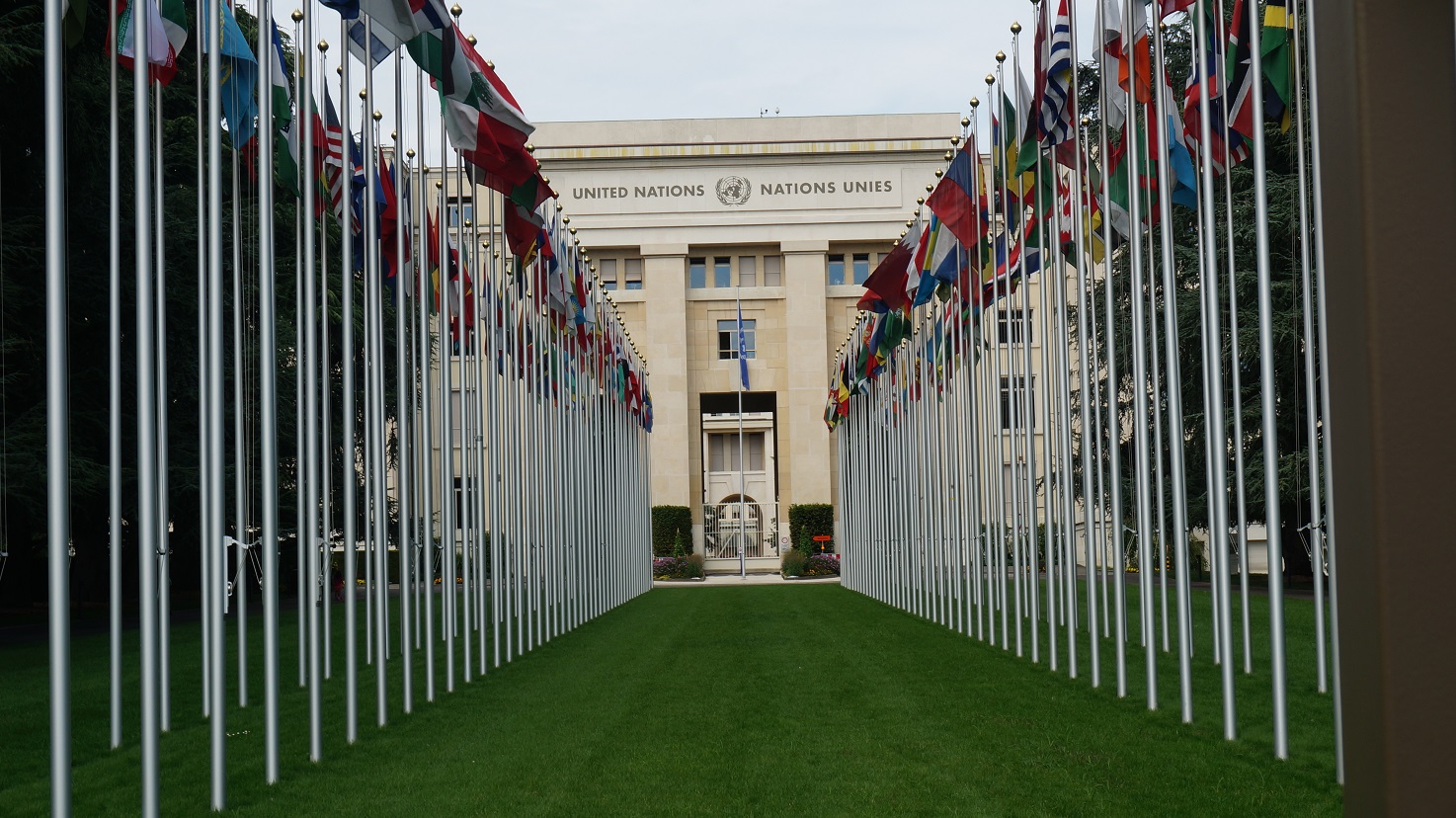
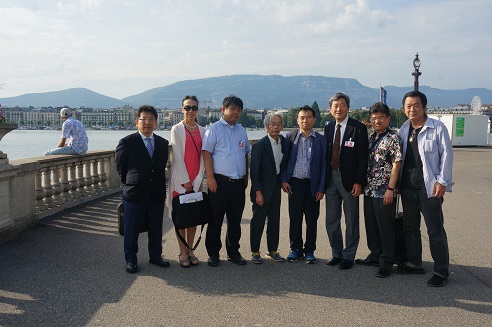
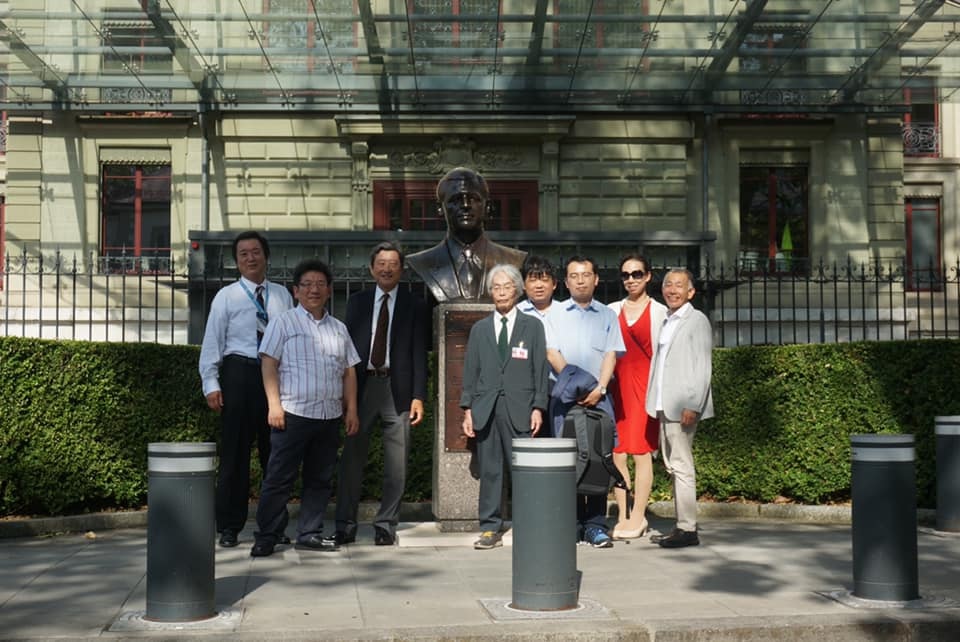
国際歴史論戦研究所(International Research Institute of Controversial Histories /iRICH)では、2019年6月24日から7月12日まで開催されたジュネーブ国連人権理事会(UNHRC)の第41セッションにスタッフを派遣し対国連活動を行いました。
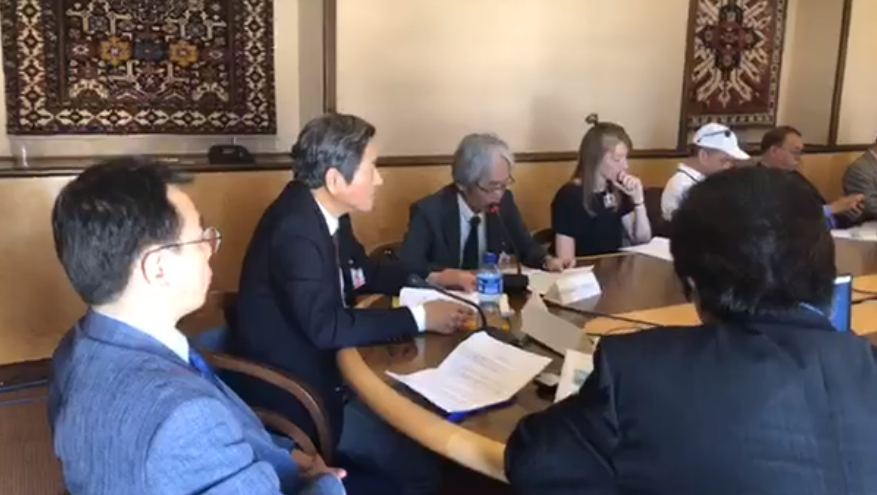
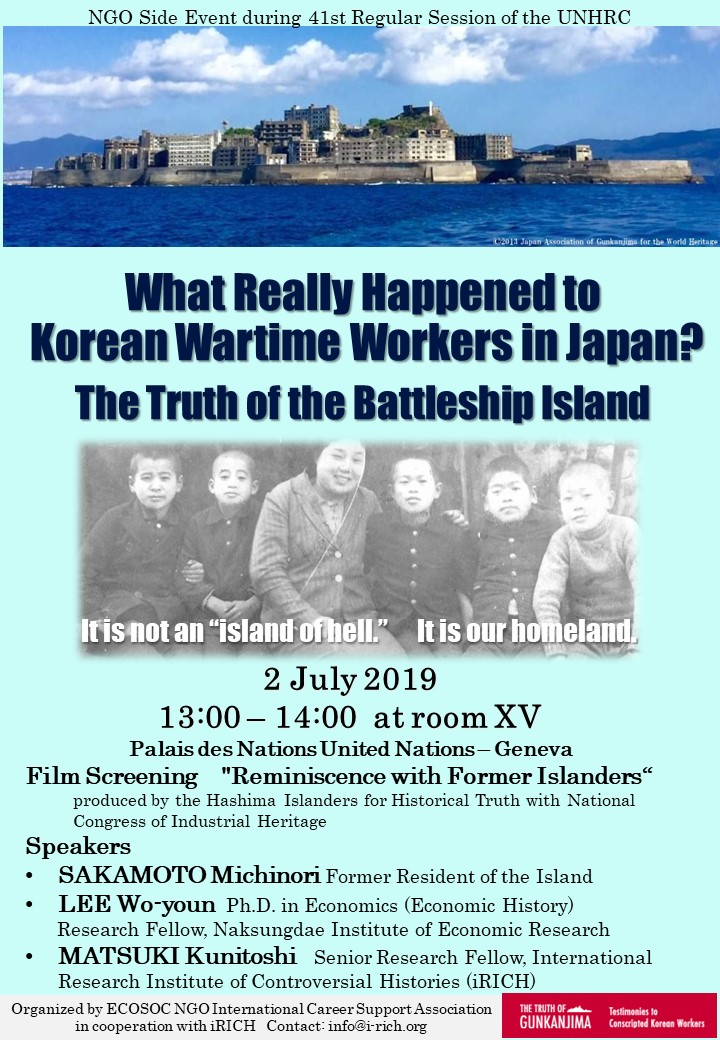
主な活動として、7月2日にNGOサイド・イベント『朝鮮半島からの戦時労働者に本当は何が起こったのか? - 軍艦島の真実』を開催。韓国から李 宇衍(イ・ウヨン)先生、長崎から軍艦島元島民の坂本道徳様をお招きしてご登壇いただきました。加えて本会議で2つのショートスピーチを行うと共に、3本の意見書も提出いたしました。
報告会では、iRICH派遣団からの報告とともに、国連でご登壇いただいた李先生と坂本様にもご参加いただき、国連イベントでの発言や現地の様子についてお話いただきます。
今後ますます重要となる民間の対外発信の先駆けとなるべく、iRICHのこれまでの活動内容と今後の基本方針についてもご報告いたします。
皆様のご来場を心よりお待ち申し上げます。

un_s

【日時】令和元年8月6日(火) 開会15時(開場14時半)、閉会17時(予定)

【場所】参議院議員会館 1階 101会議室   東京都千代田区永田町2-1-1
(アクセス)
地下鉄 有楽町線・半蔵門線・南北線「永田町駅」1番出口よりすぐ
地下鉄 丸ノ内線・千代田線「国会議事堂前駅」1番出口より徒歩5分

【プログラム】(予定)
1. 開会の挨拶   杉原誠四郎 (iRICH会長)
2. 来賓ご挨拶   山田 宏 防衛大臣政務官(参議院議員)
3. iRICH活動報告 山下英次 (iRICH所長、大阪市立大学名誉教授)
4. 国連参加者、派遣者 報告
・ 李 宇衍(イ・ウヨン)(経済学博士[経済史]、落星台経済研究所研究員、慰安婦と労務動員労働者銅像設置に反対する会代表) 「朝鮮人労務動員の真実」
・ 坂本道徳 (端島軍艦島元島民、NPO法人軍艦島を世界遺産にする会理事長)「軍艦島からのメッセージ」
・ 松木國俊 (iRICH上席研究員、朝鮮近現代史研究所所長) 「韓国の国際条約違反と人権侵害」
・ 藤木俊一 (iRICH上席研究員、テキサス親父日本事務局長)「国連人権の舞台裏で何が起こっているか」
・ 山本優美子 (iRICH副会長、なでしこアクション代表)「対国連活動のこれから」
5. 閉会の挨拶   茂木弘道 (iRICH上席研究員、史実を世界に発信する会・代表代行)

【参加方法】 参加費無料
・事前申込みは必要ありません。当日、受付にて名前、住所等をご記入いただきます。
・参議院議員会館のロビーで当会のスタッフより入館証を受け取ってください。
・席数に限り(収容108名)がありますので、お早目にお越しください。

【懇親会】17時半~ 全国町村会館(千代田区永田町1-11-35)地下1階レストラン「ペルラン」
参加費 3,000~4,000円   *先着20名様
参加ご希望の方は、事前に国際歴史論戦研究所 事務局にご連絡、または参加申し込みフォームにご記入ください。
懇親会参加申し込みフォームhttps://i-rich.org/?page_id=240

【主催 お問い合わせ】 国際歴史論戦研究所 事務局
メール:info@i-rich.org   電話:03-6912-0047  FAX: 03-6912-0048
ホームページ:https://i-rich.org/

【後援】 慰安婦の真実国民運動(ATCW)

【報告】国連NGOイベント「朝鮮半島からの戦時労働者に本当は何が起こったのか~ 軍艦島の真実」

un

皆様にご支援いただきました国際歴史論戦研究所の国連サイドイベントは無事に終了いたしました。
沢山の方々、団体にご協力、応援いただき心より感謝申し上げます。
引き続き対国連活動を行ってまいります。
今後もよろしくお願い申し上げます。

********************************************************************

【 サイドイベント 】
◆ タイトル:朝鮮半島からの戦時労働者に本当は何が起こったのか ~ 軍艦島の真実
What Really Happened to Korean Wartime Workers in Japan:the Truth of the Battleship Island

un1

◆ 日時場所:2019年7月2日(火)13:00~14:00 ジュネーブ国連パレ・デ・ナシオン XV(第15)会議室

un_side_event_2019.7.2

◆ 配布資料
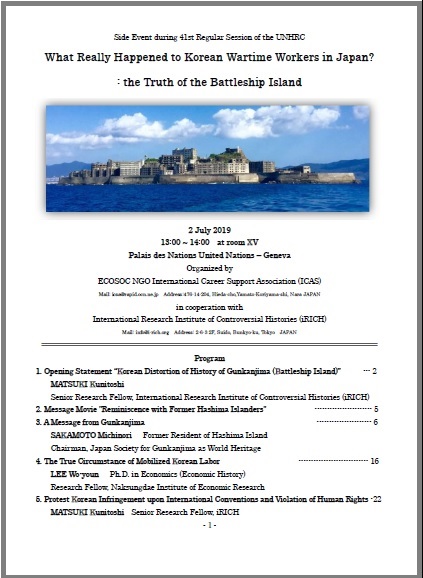
プログラムとプレセンテーション原稿(英語・日本語・韓国語)
front_page

・李宇衍氏 論文
英語: Korean Coal and Metal Mineworkers Mobilized in Wartime Japan: The Question of Wages and Ethnicity Based Disparities
日本語: 戦時期日本へ労務動員された朝鮮人鉱夫(石炭、金属)の賃金と民族間の格差
・軍艦島リーフレット英文 長崎市提供

◆ 上映動画

◆ 紹介した軍艦島の写真 (スライドショー)


※ 上映動画は、「真実の歴史を追求する端島島民の会」のご協力で、 「一般財団法人産業遺産国民会議」が作成したものです。「軍艦島の真実ー朝鮮人徴用工の検証ー」 から引用し、「一般財団法人産業遺産国民会議」より許可を取って上映をいたしました。

※ 紹介した軍艦島の写真(スライドショー)は「真実の歴史を追求する端島島民の会」、「一般財団法人産業遺産国民会議」、「NPO法人軍艦島を世界遺産にする会」が提供してくださいました。

関係各団体のご協力に感謝申し上げます。


【 人権理事会での発言 】

◆ 李宇衍 氏 2019年7月2日
Item:3 General Debate (Cont’d) – 18th Meeting, 41st Regular Session Human Rights Council
24分24秒~
http://webtv.un.org/watch/item3-general-debate-contd-18th-meeting-41st-regular-session-human-rights-council-/6054649987001/

日本語訳:
議長
韓日の関係は過去になかった程の「危機」直面しています。
これは現在問題になっている戦時における朝鮮人労働者(徴用工)に起因します。
韓国の「裁判所の判決」と「政府の態度」による「朝鮮人労働者たちは誘拐されて強制的に奴隷のように働かされた」という馬鹿げた思い込みによるものです。
しかし、多くの朝鮮人たちは「自らの意思」で日本に行ったのです。
そして「徴用」は完全に法に則った手続きを経て行われたのです。
給料は全ての労働者に対して日本人も朝鮮人も関係なく「公平」に支払われたおりました。
給料は非常に「高額」でした。
そして戦時の朝鮮人労働者たちは自由で気楽に暮らしていました。
歴史を誇張し歪曲している韓国と日本の学者達や政治家達はその様な議論を直ぐに止めるべきです。
我々は人権理事会が韓国政府に対して次のように勧告するよう要請します。
1.韓国政府はこの歴史に関する問題を出処がわからない歪曲された証拠に基づくのではなく「一次証拠」を基にして調査すべきである
2.韓国政府は韓日関係が破綻する前に問題解決の為に日本政府に協力すべきである
ご清聴ありがとうございました。

発言 英語:
Mr. Chair,
At present, the relationship between ROK and Japan faces its greatest crisis ever.
This has much to do with current issue of mobilized wartime Korean labourers.
The Korean judicial ruling and governmental attitude derive from erroneous belief that Korean labourers were forcibly abducted and made to work like slaves.
However, many Koreans went to Japan voluntarily, and conscription was practiced according to legal process.
Wages were paid impartially to all workers, Japanese and Koreans alike.
Their wages were very high.
And then, wartime Korean labourers lived a free and easy life.
Korean and Japanese scholars and politicians who exaggerate and distort history should stop such kind of arguments.
We want this council to recommend ROK government as follows,
1. Korean government to investigate this historical issue solely based on the primary evidences rather than distorted evidences from unknown sources,
2. Korean government needs to cooperate with Japanese government in order to solve this problem, before the relationship become bankrupt.
Thank you for attention.
※ 李 宇衍(イ・ウヨン):経済学博士(経済史)、落星台経済研究所研究員、「慰安婦と労務動員労働者銅像設置に反対する会」代表

◆ 松木國俊 氏 2019年7月3日
Item:5 General Debate – 23rd Meeting, 41st Regular Session Human Rights Council
2時間33分6秒~
http://webtv.un.org/watch/item5-general-debate-23rd-meeting-41st-regular-session-human-rights-council-/6055385648001/

日本語訳:
議長
韓国の最高裁判所は、「第二次大戦中に朝鮮人を強制連行して日本の工場で奴隷労働をさせた」という理由で日本企業に個人に対する賠償命令を下した。
しかしこれは歴史的事実に全く反している。
当時多くの朝鮮人が自ら望んで日本で働いたのが実態である。
1944年に徴用令が朝鮮人男性にも適用されたが、当時Wartime Laborersとして日本国民である彼らを徴用することは国際法に照らしても合法である。
さらに日韓間の請求権問題は個人の請求権も含めて1965年に締結された政府間協定によって「最終的かつ完全に解決された」ことを確認している。
韓国が条約を守らず日本人に賠償を要求することは日本人の人権を侵害する行為である。
我々は人権理事会が韓国政府に対して次のように勧告するよう要請する。
1. 稚拙な法制度による日本人への人権侵害を即刻中止する。
2. 1965年の二国間条約を遵守する
ご清聴ありがとうございました。

発言 英語:
Thank you Mr. President.
Republic of Korea’s supreme court ruled that Japanese enterprises must pay reparations to Korean individuals because, during the WW2, Japanese companies forcibly mobilized Koreans to work as slave labor in the Japanese factories.
However, this is totally against the historical truth.
The matter of the fact is, many of those Korean men voluntarily applied and worked in Japan due to much higher wages in Japan.
In 1944, the requisition order was announced and applied to Korean men as wartime labors which is legitimate order under the International law.
In 1965, bilateral treaty was made between Japan and the ROK government acknowledging the issue is “finally and completely” resolved.
Nullifying the treaty and demanding reparation is violating the human rights of the Japanese people.
We demand this Council to recommend the ROK government as follows;
1. Stop violating the human rights of the Japanese people by exploiting ROK’s immature legal system.
2. Strictly keep the bilateral treaty of 1965.
Thank you for your attention, Mr. President.


【 人権理事会への意見書 】
イベントに先立って人権理事会に意見書を提出しました。

◆ 「徴用工は朝鮮半島からの戦時労働者/ Mobilized workers were wartime laborers from the Korean Peninsula」
日本語版 /  原文英語版

◆ 「韓国人戦時労働者の実態 / The True Circumstance of Mobilized Korean Laborers」
日本語版  /  原文英語版

◆ Japan’s Broadcasting Law and the distorted report of Special Rapporteur Mr. David Kaye
原文英語版

*****************************************************************************

【 主なメディア報道 】

共同通信 2019/7/3
軍艦島「強制労働なかった」徴用工問題で国連イベント
https://this.kiji.is/518894266074891361?c=247599509560559095

産経 2019.7.2 22:01
「地獄の島」は誤解 軍艦島の元島民らが韓国側に反論
https://www.sankei.com/politics/news/190702/plt1907020041-n1.html

夕刊フジ 2019.7.3
軍艦島“地獄の島”は誤解 元島民らが韓国側に反論!「賃金の民族差別はなかった」
https://www.zakzak.co.jp/soc/news/190703/for1907030006-n1.html

Japan forward July 11, 2019
Geneva Symposium Exposes the Myth of Gunkanjima as ‘Hell Island’
http://japan-forward.com/geneva-symposium-exposes-the-myth-of-gunkanjima-as-hell-island/

*****************************************************************************

https://youtu.be/u4y7sS44JH4

国連NGOイベント開催!「朝鮮半島からの戦時労働者に本当は何が起こったのか~ 軍艦島の真実」

なでしこアクション代表山本優美子が副会長を務める国際歴史論戦研究所が、所謂徴用工問題と軍艦島についてジュネーブ国連でNGOイベントを開催することになりました。
山本も準備に関わり、現地ではスタッフとしてサポートを行います。
今回のイベントにご理解とご支援いただけましたら大変有難く、以下にご紹介いたします。

************************************************************************************

un3

2019年7月 ジュネーブ国連本部 人権理事会
NGOサイドイベント 開催します!

朝鮮半島からの戦時労働者に本当は何が起こったのか
軍艦島の真実

What Really Happened to Korean Wartime Workers in Japan
the Truth of the Battleship Island

緊急ご支援のお願い

「徴用工は日本の不法な植民地支配時代の戦時中に朝鮮半島から強制連行されて奴隷のように扱われた朝鮮人労働者」、「軍艦島は徴用工が働かされたアウシュビッツのような地獄島」そんな捏造の歴史が世界に広まっています。

反論せずに黙っていたら嘘でも信じられてしまいます。韓国の徴用工原告側弁護士は、かねてから国連人権理事会で徴用工問題を訴えるとも主張しています。今私たちが声を挙げなければ「日本軍慰安婦=性奴隷説」のように覆すのが大変な事態になりかねません。

そこで、私たち国際歴史論戦研究所のチームは、世界中から政府関係者やNGOが集まるジュネーブ国連人権理事会に合わせて国連の会議室でNGOイベント「朝鮮半島からの戦時労働者に本当は何が起こったのか~軍艦島の真実」を開催することにしました。

長崎から軍艦島元島民、韓国から戦時労働者問題研究者、当研究所から朝鮮問題専門家の松木國俊が登壇して軍艦島の真実と所謂徴用工問題を訴えます。ビデオ上映や写真の紹介、資料配布も行う予定です。

国連という場での挑戦となりますが、真実を発信するために私たちは民間で出来ることを行動します。

派遣には資金が必要です。わたしたちの国連活動ご賛同下さる皆様、ご支援をいただけましたら大変有難く存じます。

どうぞよろしくお願い申し上げます。

14876452_1161919583889996_3026861261628939411_sc


【 NGOイベント予定日・場所 】
2019年7月2日(火) 国連ジュネーブ本部内会議室


【 イベント登壇者 】
・ 李 宇衍(イ・ウヨン):経済学博士(経済史)、落星台経済研究所研究員、「慰安婦と労務動員労働者銅像設置に反対する会」代表

・ 坂本 道徳(サカモト ミチノリ):端島(軍艦島)元島民、NPO法人軍艦島を世界遺産にする会理事長

・ 松木 國俊(マツキ クニトシ):国際歴史論戦研究所上席研究員、朝鮮近現代史研究所所長

※軍艦島の真実を伝える動画上映、写真紹介、資料配布も行います。


【 人権理事会への意見書 】
イベントに先立って人権理事会に意見書「徴用工は朝鮮半島からの戦時労働者/ Mobilized workers were wartime laborers from the Korean Peninsula」を提出しました。
日本語版 /  原文英語版


【 国連NGOイベント派遣予算 】
派遣期間2019年6月30日(日)~7月4日(木)
登壇者とスタッフの計五名の派遣を計画しています。

一人当たりおよそ25万円かかります。
五名 x 25万円 = 合計125万円 の資金が必要となります。

一人当たり25万円の内訳は、、、
・ジュネーブ往復フライト: 一人15万円
・宿泊代・諸経費:現地4泊 一人10万円
※ジュネーブは物価が高いですが節約します!


【 寄付口座 】
◆ 郵便振替口座
記号番号 00180-9-421130
口座名  国際歴史論戦研究所

◆ ゆうちょ銀行
店名 〇一九店
当座
口座番号 0421130
口座名  国際歴史論戦研究所
※寄付金の領収書が必要な方は主催団体「国際歴史論戦研究所」事務局にご連絡下さい。


【 主催団体 】
国際歴史論戦研究所 https://i-rich.org/  所長 山下英次
事務局メール info@i-rich.org  電話03-6912-0047 FAX 03-6912-0048

※ 国連イベントについての取材やお問い合わせは事務局までご連絡下さい。


スライド3

スライド1

スライド2

※ 軍艦島の写真は「真実の歴史を追求する端島島民の会」、「一般財団法人産業遺産国民会議」、「NPO法人軍艦島を世界遺産にする会」がご提供くださいます。

※ 国連のイベントで紹介するビデオは、「真実の歴史を追求する端島島民の会」のご協力で、 「一般財団法人産業遺産国民会議」が作成したものです。「軍艦島の真実ー朝鮮人徴用工の検証ー」 から引用し、「一般財団法人産業遺産国民会議」より許可を取って上映をいたします。

関係各団体のご協力に感謝申し上げます。

**********************************************************

< 参考動画 >
語り合う端島の元島民たち Reminisence with Former Hashima Islanders

誰が軍艦島の犠牲者なのか Who were the victims of Gunkanjima?

“強制徴用"の神話  李 宇衍

************************************************************************************

< 参考ニュース >

産経 2019.6.5
軍艦島元島民ら国連で史実発信へ 来月シンポ開催、「地獄島」批判に反論
https://www.sankei.com/world/news/190605/wor1906050024-n1.html

Japan Forward June 12, 2019
Former Gunkanjima Residents to Debunk Korea’s False Claims on Wartime Laborers at U.N. Side Event
https://japan-forward.com/former-gunkanjima-residents-to-debunk-koreas-false-claims-on-wartime-laborers-at-u-n-side-event/