Category Archives: 米国

全米フリーペーパーに有志が「慰安婦問題特集」記事掲載

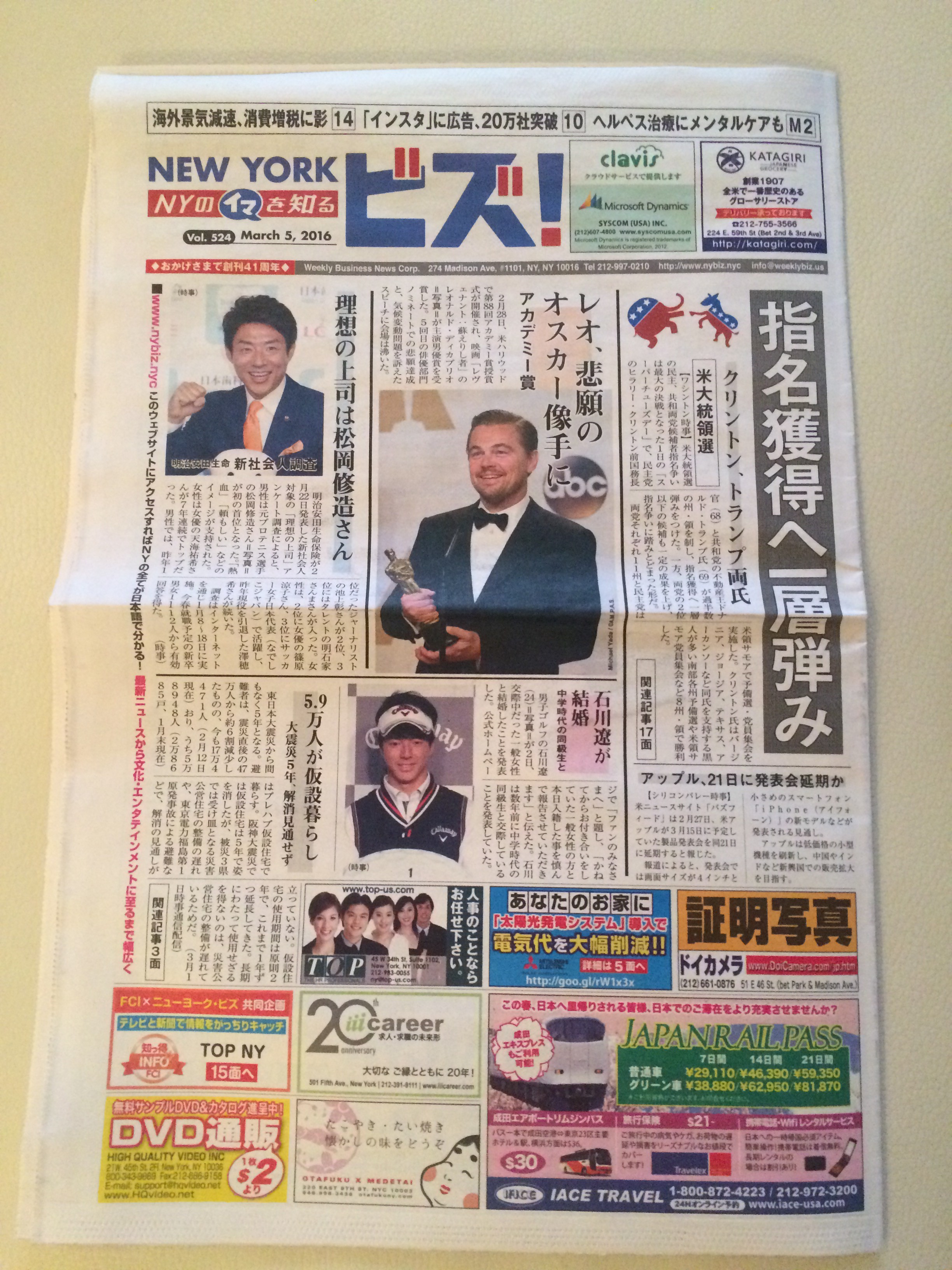
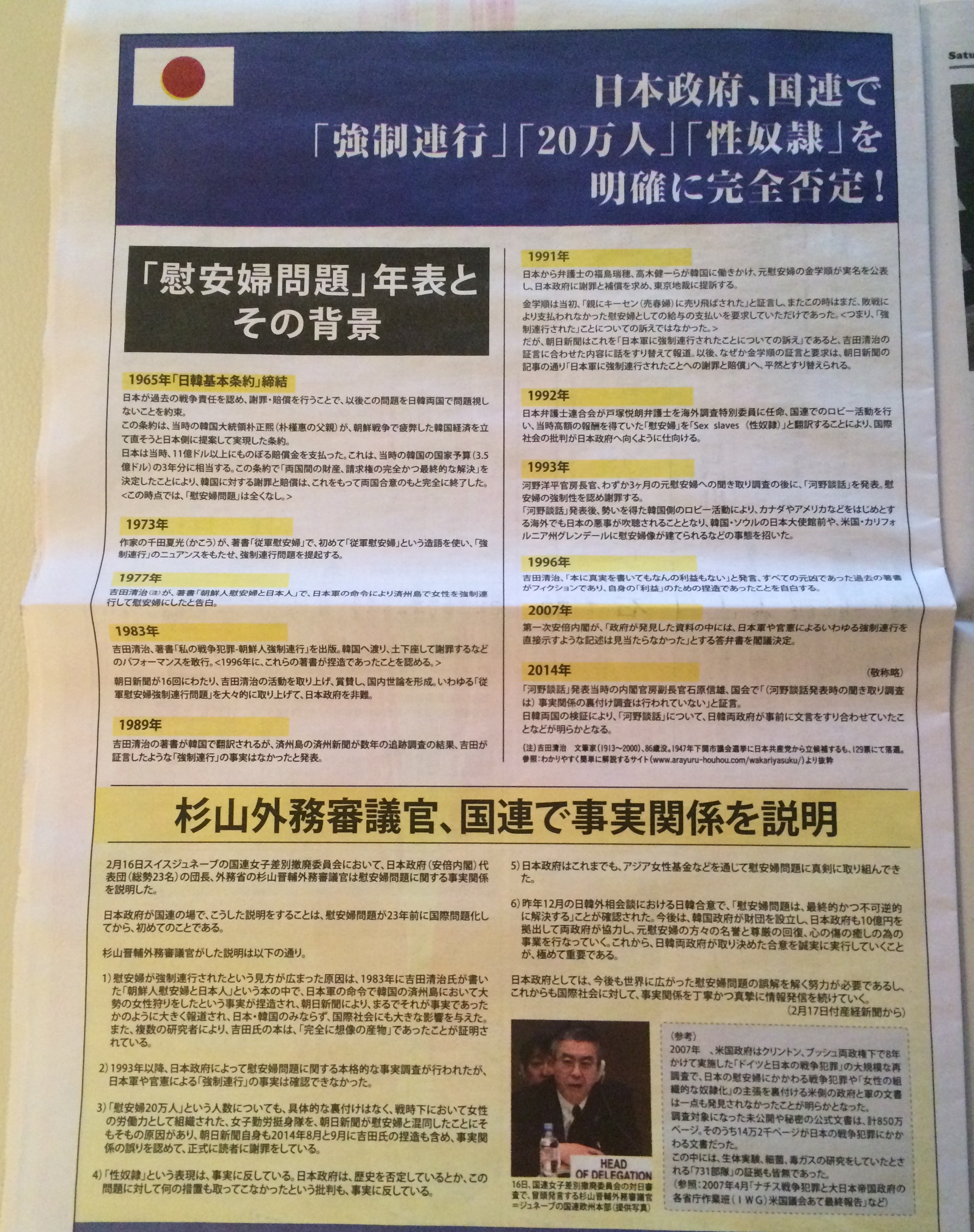
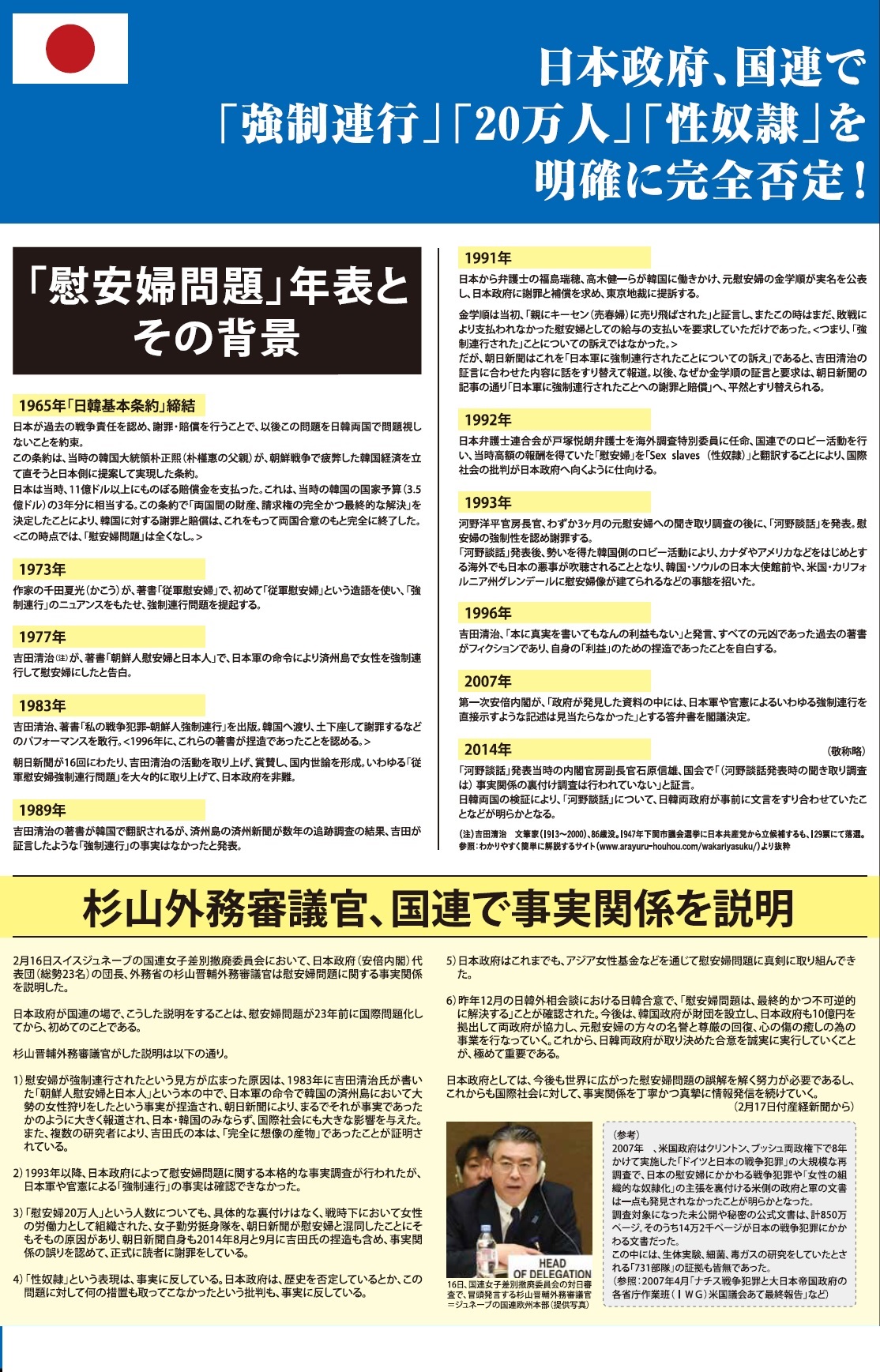
米国のなでしこアクション仲間Japanese Women’s Center がアメリカ全国36都市に無料配布されている日本語のフリーペーパー「ニューヨーク ビズ 」に「慰安婦問題特集」記事を出してくれました。2016年3月3日から4回掲載されます。

米国の皆さま、この記事を見かけたらぜひお知り合いにも広めてください。

*****************************************************************
記事 PDF版ダウンロード
※画像をクリックすると別ウィンドウで拡大表示されます。

NY_CW

*****************************************************************

image2

image1

LA Times(2月8日付)「慰安婦」カリフォルニアの教科書上でいかに歴史がつくられていくかという教訓

「ニューヨーク ビズ 」の署名広告をご覧になった方ここをクリックしてください

*****************************************************************
【 日英対訳 】

Los Angeles Times  2016年2月12日
‘Comfort women’ and a lesson in how history is shaped in California textbooks.
「慰安婦」と、カリフォルニアの教科書上でいかに歴史がつくられていくかという教訓
http://www.latimes.com/local/education/la-me-comfort-women-curriculum-20160207-story.html

By Victoria Kim / Contact Reporter

After nearly a decade of delays, California educators released a draft guideline that will shape how history is taught to students across the state.
10年近くを経て、カリフォルニア教育関係者は、州全域の学生にいかに歴史を教えるかを形づくるガイドライン草案を発表した。

The nearly 1,000-page “History/Social Science framework” received little public attention and went largely unreported in mainstream media when it was announced in December.
千ページ近くの「歴史/社会学フレームワーク」は、12月に発表された時には一般の注目を引くことはほとんどなく、どこの主流メディアにも取り上げられることはなかった。

But in multicultural California, that hardly means it went unnoticed.
しかし多文化のカリフォルニアでは、誰の目にも留まらずにいたわけではない。

In Japanese and Korean communities on both sides of the Pacific, the guidelines have been breathlessly covered in news reports and generated rival petitions signed by thousands on each side.
太平洋両岸の日本人と韓国人コミュニティでは、ガイドライン(指導要領)は息つく暇もないほどニュースで報道され、両陣営で何千もの署名を集める戦いに発展した。

The brouhaha concerns two sentences describing what will be taught in 10th-grade world history classes about the women known as “comfort women,” who were coerced into sexual slavery in wartime brothels for Japanese soldiers during World War II. The passage has been met with celebration among Korean American groups that have campaigned to bring attention to the issue in the U.S., and concern from some Japanese groups that consider it an unfairly negative portrayal of their home country.
騒動は第二次大戦中に日本軍のための売春施設で性奴隷を強制された「慰安婦」として知られる女性達のことを高校生に教える2つの文に関してである。この問題が米国で注目されるべく運動を推進してきた韓国系米国人のグループは、慰安婦の記述を喜ばしく受け止め、日本人のグループには、公正を欠いた自分達の国を貶すイメージだと問題視するものもある。

The Japanese and Korean groups are only the latest to bring their historic contentions to California classrooms, where the subject of world history is increasingly entangled with questions of personal identity and family history rather than a set of supposed facts that designated experts hand down from ivory towers.
日本人と韓国人のグループは、象牙の塔にいる専門家の学説である一連の事実より、個人のアイデンティティや家族の歴史が問われる理由で世界史テーマがもつれることの増えているカリフォルニアの学校へ、自分達の歴史論争を持ち込んだ一番最後手だっただけだ。

Until recently world history focused mainly on European history in U.S. high schools. As the scope expands to other parts of the world, California classrooms are becoming battlegrounds in which recent immigrant groups wrestle over whether and how their ancestors’ stories are told to the state’s next generation.
最近まで、米国の高校では世界史は主にヨーロッパ史が中心だった。それが世界の他の地域にも及ぶにつれ、カリフォルニアの学校は、新しい移民グループが自分達の祖先の話が州にいる次世代にいかに語られうるかを争う戦場となっている。

In the years that the committee of educators has been working on the guidelines, Hindu and Sikh groups, Polish Americans and Persian historic societies have each come before the authors of the framework with requests on how their history is depicted.
教育委員会がガイドライン作成をしていたここ数年、ヒンドゥとシーク教のグループ、ポーランド系米国人とペルシャ史協会などが、自分達の歴史がいかに書かれているべきかの要請をフレームワークの執筆者達にそれぞれ提出している。

The community groups who spoke at public meetings about their history far outnumbered teachers or educational professionals, said Nancy McTygue, who co-chaired the committee crafting the framework until last year.
公開会議で自分達の歴史について話したコミュニティグループは、教師や教育の専門家を数で圧倒していたと、昨年までフレームワーク作成委員会共同議長だったナンシー・マクティグは述べた。

“People were angry, people were pleading. People were excited, happy. Every emotion you can think of,” said McTygue, herself a former teacher who has taught high school history. “History is an interpretive discipline, and everybody’s got their own interpretation.”
「彼らは怒り、嘆願し、また興奮し、喜んでいました。考えつく限りのあらゆる感情がありましたよ」自身が元高校の歴史教師であるマクティグは言った。「歴史とは解釈の教科です。みなそれぞれの解釈があるのです」

James Grossman, executive director of the American Historical Assn., said history should get revised as scholars and educators learn more about the world, and that the increased number of voices getting involved would ultimately be a blessing for California students.
米国歴史学会理事長ジェームス・グロスマンは、歴史は世界についてより多く学ぶ学者や教育者によって修正されるものであり、そのような声が増えるのはカリフォルニアの学生達にとっては喜ばしいことだと述べた。

“The conversation is going to be a hell of a lot more interesting and more contentious, but that’s a good thing,” he said. “The conversation is going to reflect a wider perspective on the past, wider number of sensibilities.”
「話し合いはさらにとてつもなく面白く、論争となりますよ。しかしそれはいいことです。話し合いは過去へのより広い視野、より広い感受力を反映していきます」

World historian Patrick Manning, a University of Pittsburgh professor, said the debates in California were a result of clashes between documented history and the communities’ collective memories, which inform questions of identity.
ピッツバーグ大学教授の世界史学者パトリック・マニングは、カリフォルニアでの討論は史実の歴史と共同体に蓄積された記憶、アイデンティティに係わる問いに答えるそれとの間の衝突がもたらしたものであると述べた。

“The depth and intensity of those debates is because of their memory – their feelings about the past – as much as it is about history,” he said.
「これら討論の深さと激しさは歴史についてであるが、同じぐらい彼らの記憶、過去に対する感情もかかわっている」

John W.I. Lee, a professor of ancient Greek and Persian history at UC Santa Barbara, reviewed the framework and submitted comments at the urging of a group of Persian parents. They were concerned that ancient history in the sixth-grade curriculum was told only from the perspective of the Greeks, demonizing Persians as “barbarians” without recognizing the political and cultural contributions of the Achaemenid Empire.
カリフォルニア大学サンタ・バーバラ校、ギリシャ古代史とペルシャ史の教授ジョン・W.I. リーは、フレームワークとイラン系の親達のグループからの催促で出されたコメントを観閲した。彼らは6年生の古代史の内容がギリシャ人の視点からのみ語られており、アケメネス王国の政治的文化的遺業を無視してペルシャ人を「蛮族」と悪者にしていることを憂慮していた。

“When you have a state that’s as multicultural and multiethnic as California, of course it becomes an issue in the classrooms,” he said.
「カリフォルニアのように多文化多人種の州にいるなら、当然教室で問題になりますね」と教授は言った。

One of the parents, Jaleh Niazi, said she and others asked themselves if they were being biased by pride for their own culture. But after consulting scholars, they concluded there were historic inaccuracies to be corrected in depictions of ancient Persia and modern Iran, she said.
親グループの一人ジャレ―・二アジは、自分達が果たして自分達の文化へのプライドで偏った見方をしているか自問したと言った。しかし学者にも意見を聞いた上で、古代ペルシャと近代イランの解説には、修正されるべき歴史的事実誤認があるという結論に至った。

“We want our kids to take pride in what was good, and learn from what was bad,” said Niazi, a pediatrician who has two daughters in the 10th and eighth grades. “This is not only about my children. It’s important for California as a whole to know the world they live in.”
「子供達には自分達の良いものを誇りに思い、悪い事からは学んで欲しいのです」高1と中2の娘を持つ小児科医の二アジは言った。「うちの子供だけではありません。カリフォルニア住民全部にとって、自分達の住む世界を知ることは重要でしょう」

The new language on “comfort women” marks the first proposal to teach what has been a long-contentious political issue in East Asia in high school classrooms in the U.S. It has the potential to widely influence how textbooks address the topic.
「慰安婦」の新しい説話は、長い間続いている東アジアの政治問題を米国の高校で教える最初の提案を記すものだ。これは教科書がいかにそのテーマを扱うか、広く影響する可能性である。

The guidelines recommend that the subject of “comfort women” be taught to high schoolers “as an example of institutionalized sexual slavery, and one of the largest cases of human trafficking in the 20th century.”
ガイドラインは「慰安婦」について、「制度化された性奴隷の例と20世紀最大の人身売買の事例」として高校生に教えるよう推奨している。

The passages were incorporated into the draft framework at the urging of Korean community groups, authors of the guideline said. McTygue and Bill Honig, co-chairs of the History-Social Science subject matter committee, said they consulted the latest historical research and survivors’ testimony and concluded there was enough evidence for it to be taught in schools.
韓国人コミュニティグループが急き立てて、記述がフレームワークの草案へ取り入れられたと、ガイドライン執筆者は話した。歴史-社会学主題対象委員会共同議長ナンシー・マクティグとビル・ホニグは、最新の歴史研究と生存者の証言を考察し、学校で教えるのに十分な証拠があるという結論に至ったと述べた。

Honig said he believed the issue would be a valuable starting point for students to research and discuss the present-day problem of human trafficking.”Kids should know that this is a problem and it’s going on. It’s not just in Japan and Korea during World War II, it’s a bigger problem,” he said.
ホニグは、慰安婦問題は学生が現在の人身売買問題を調査し論じるための重要な出発点になるはずだと言った。

After the conservative Japanese newspaper Sankei reported on the new framework in December, under the tag “History Wars,” an online petition on Change.org has collected more than 5,000 signatures protesting the description. The petition asks that the passages be amended to also describe comfort women as “well-paid prostitutes” and that they also served Allied troops in Japan immediately after the war.
日本の保守系新聞産経が12月に「歴史戦」の名の下にこの新フレームワークを報じた後、オンライン署名サイトChange.org には論説に対する抗議の署名が5千人以上集まった。署名は慰安婦の記述も「高収入売春婦」と訂正し、また彼女たちは終戦直後の日本で連合軍にも性サービスを提供したことを解説するよう求めた。

The petition, which is predominantly signed by Japanese residents but also a few dozen Californians, says school textbooks should not be used as “propaganda advertisement.”
署名は主として日本人からだが、中にはカリフォルニア住民もおり、学校教科書は「プロパガンダ広告」に利用されるべきではないと訴えた。

Honig, who was sent a copy of the petition, said he was surprised the language would be controversial, especially given that the Japanese government has apologized.
署名書コピーを送られたホニグは、慰安婦の説話が問題視され、とりわけ日本政府が謝罪したことが論争になるとは、驚くしかないと述べた。

Hiroyuki Miyoshi, a Culver City computer programmer who signed the petition, said he was concerned his children will face animosity in school based on what he believed was an unsettled point of history.
オンライン署名をしたカルバーシティ在住のコンピュータープログラマー、ミヨシ・ハルユキは、この問題は歴史で疑義のあるところであり、これが原因で彼の子供達が学校で敵意に晒されるのを憂慮していると言った。

“In this situation I don’t think it’s fair to teach, when the conversation is still controversial,” said Miyoshi, 50, whose two younger children are in the fifth and sixth grades and will be taught under the new framework. He said he believed the issue was a matter between the two East Asian neighbors and had no place in California textbooks.
If the framework is adopted, Miyoshi said he would probably urge his children to do their own research rather than take in what they’re taught as fact.
「まだ論争が続いている時に、この状況で学校で教えるのは公平ではないと思います」新フレームワークに基づき教えられる5年生と6年生の子供をもつミヨシ(50)は言った。彼は、この問題は東アジアの二つの隣接国の事であって、カリフォルニアの教科書に載るものではないと言う意見だ。

“The U.S. has been drawn into this as a battleground for these memory wars,” said Daniel C. Sneider, associate director of research at Stanford University’s Shorenstein Asia-Pacific Research Center, who has studied depictions of World War II events in textbooks in the U.S. and elsewhere.
「米国はこの問題で記憶戦争の戦場に引きずり込まれた」と言ったのは、米国その他の教科書に掲載された第二次大戦の出来事の叙述を研究したスタンフォード大学ショーレンスタイン・アジア太平洋研究センター準局長ダニエル・C・シュナイダーだ。

He said he was “pleasantly surprised” by the inclusion of comfort women in the new California framework, and said it showed a broadening global perspective in how history is taught here.
彼は、新しいカリフォルニアのフレームワークに記された慰安婦の包括に”喜びをもって驚かされ”、ここでどのように歴史が教えられるかを通し、広がっているグローバルな視点を示した述べた。

Because California, along with Texas, is the largest buyer of textbooks, state guidelines will probably reverberate elsewhere, he said.
カリフォルニアはテキサスと並んで教科書の最大の買い手のため、州のガイドラインは他でも反響を呼ぶだろうとのことだ。

Phyllis Kim, an activist with the Korean American Forum of California, which has vigorously campaigned to bring recognition to comfort women, said the new framework was a step toward solidifying Korean Americans’ place in California.
慰安婦を承認させるため精力的に運動を推進してきたカリフォルニア韓国系米国人フォーラムの活動家フィリス・キムは、この新フレームワークはカリフォルニアの韓国系米国人が団結に向かう歩みであると述べた。

“When we immigrate, we bring our language, culture and history,” she said. “That’s the wealth that we bring into this state.”
「移民して来る時、われわれは自国の言葉、文化、歴史を伴って来ます。それは私達がこの州にもたらす財産です」とキムは言った。

victoria.kim@latimes.com
Twitter: @vicjkim
San Jose Mercury News(2月8日付)争点-「慰安婦」をカリフォルニアの児童にどのように教えるか

「ニューヨーク ビズ 」の署名広告をご覧になった方ここをクリックしてください

*****************************************************************
【 日英対訳 】

San Jose Mercury News  2016年2月8日
Controversy over how to teach California kids about ‘comfort women’
「慰安婦」をカリフォルニアの児童にどのように教えるかの争点
http://www.mercurynews.com/california/ci_29490826/controversy-over-how-teach-california-kids-about-comfort

Los Angeles — Guidelines for California educators on how to teach history students about the use of female sex slaves by Japanese soldiers during World War II have prompted debate in Japanese and Korean communities here and abroad.
ロサンジェルス–第二次大戦中の日本兵による女性を性奴隷として用いた問題について、歴史を勉強する生徒にどのように教えるかを示すカリフォルニア州教育従事者のためのガイドライン(指導要領)が、ここ米国および海外の日本人・韓国人社会で論争を加速させた。

The controversy concerns two sentences about so-called “comfort women” in the nearly 1,000-page “History/Social Science framework” released in December, the Los Angeles Times reported Sunday (http://lat.ms/1Putkpu ).
争点は12月に発行された千ページ近くの「歴史・社会学フレームワーク」の中に出てくる、いわゆる「慰安婦」についての2文に関してであると、ロサンジェルス・タイムスは日曜日に報じた。
(http://lat.ms/1Putkpu )

The passage has been met with celebration among Korean American groups that have campaigned to bring attention to the issue in the U.S. Meanwhile some Japanese groups consider it an unfairly negative portrayal of their home county, the newspaper said.
この問題が米国で注目されるべく運動を推進してきた韓国系米国人のグループは、慰安婦の記述を喜ばしく受けとめる一方、日本人のグループには、公正を欠いた自分達の国の負のイメージだとするものもある。

Historians believe that as many as 200,000 girls and women from Korea, China and other occupied nations were forced into Japanese military brothels. However, many Japanese and Japanese-American dispute the claims.
歴史家は、20万人もの少女や女性が朝鮮半島、中国、その他の日本占領下の国々から日本軍の売春施設へ強制的に入れられたとしている。しかし多くの日本人と日系人が、これには異議を唱えている。

The guidelines recommend that the subject of “comfort women” be taught to high schoolers as an “example of institutionalized sexual slavery, and one of the largest cased of human trafficking in the 20th century.”
ガイドラインは「慰安婦」について、「制度化された性奴隷の例と20世紀最大の人身売買の事例」として高校生に教えるよう推奨している。

The passages were incorporated into the draft framework at the urging of Korean community groups, the newspaper said. Nancy McTygue and Bill Honing, co-chairs of the History-Social Science subject matter committee, said they consulted the latest historical research and survivors’ testimony and concluded there was enough evidence for it to be taught in schools.
韓国人コミュニティグループの急き立てて、記述がフレームワークの草案へ取り入れられたと新聞は伝えた。歴史-社会学主題対象委員会共同議長 ナンシー・マクティグと ビル・ホニグは、最新の歴史研究と生存者の証言を考察し、学校で教えるのに十分な証拠があるという結論に至ったと述べた。

The new language on ” comfort women ” marks the first proposal to teach in high school classes in the U.S. what has been a long-contentious political issue in East Asia. It has the potential to widely influence how textbooks address the topic, the Times said.
「慰安婦」の新しい説話は、長い間続いている東アジアの政治問題を米国の高校で教える最初の提案を記すものだ。これは教科書がいかにそのテーマを扱うか、広く影響する可能性であるとタイムス紙は述べた。

After the conservative Japanese newspaper Sankei reported on the new framework in December, under the tag ” History Wars, ” an online petition on Change.org has collected signatures protesting the description. The petition asks that the passages be amended to also describe comfort women as ” well-paid prostitutes ” and that they also served Allied troops in Japan immediately after the war.
日本の保守系新聞産経が12月に「歴史戦」の名の下にこの新フレームワークを報じた後、オンライン署名サイトChange.org は論説に対する抗議の署名を集めた。署名は慰安婦の記述も「高収入売春婦」と訂正し、また彼女たちは終戦直後の日本で連合軍にも性サービスを提供していたことを解説するよう求めた。

典拠:ロサンジェルス・タイムス
Information from : Los Angeles Times,

【署名 / カルフォルニア州教育委員会 教科書改定案】公立学校で慰安婦問題を教えることに反対します

「ニューヨーク ビズ 」の署名広告をご覧になった方ここをクリックしてください

*****************************************************************

子どもたちを、先の見えない歴史論争に巻き込んでよいのでしょうか?

カルフォルニア州教育委員会公立高校カリキュラム改正案が、「日本軍慰安婦は性奴隷、20世紀最大の人身売買」という内容になっています。詳細はこちら

これに対し、カルフォルニア在住の方が反対署名を立ち上げました。

ご賛同いただける方、署名ご協力お願いいたします。

*****************************************************************

カルフォルニア教育委員会 へ
California Department of Education

カリフォルニアの公立学校で慰安婦問題を教えることに反対します
NOT to teach ‘Comfort Women’ in California Schools

署名はこちら
↓↓↓↓↓↓↓
http://chn.ge/1KFLbYC

【請願】 カリフォルニアの公立学校で慰安婦問題を教えることに反対します

関係者の方々へ

カリフォルニア州教育省は、最近、第10学年用の世界史の教科書に「慰安婦」についての記述を含めるというカリキュラム修正案を提示しました。私達は、この修正案に断固反対いたします。

(第10学年– World History, Culture, and Geography: The Modern World Chapter of the History-Social Science Framework for California Public Schools. 469ページ 913~919行
ダウンロード)

1. 「慰安婦」は性奴隷制度で20世紀最大の人身売買の一つである、というのは大きな誤解に基づいています。何十万人もの女性が日本軍によって強制的に拉致されたことを立証するような証拠は、幾つかの反対尋問を経ていない証言以外は未だ明らかにされておりません。 教科書である以上、生徒達が事実ではないことを事実として信じ込んでしまうような可能性は極力排除すべきであり、充分に議論し尽くされた事柄のみが内容として取り上げられるべきであることは、議論の余地がありません。

2. カリフォルニアの住民は、これまでに充分すぎるくらい「慰安婦問題」に関する議論をしてきました。私達の地域には多すぎるくらいの韓国人慰安婦の像や碑が建てられており、その設置を巡る論議の過程でコミュニティは賛成派と反対派に分断され、隣人同士の間にも論争が起きています。慰安婦問題における終わりの見えない対立に、私達は巻き込まれてしまったのです。

未だ論争の途上にある慰安婦に関する歴史教育は、本当に必要なのでしょうか?…いいえ!
このカリフォルニアで、私達の税金を使ってすべきことでしょうか?…いいえ!
カリフォルニアの生徒達を、先の見えない歴史論争に巻き込んでよいのでしょうか?…いいえ!

カリフォルニア教育省の公正さと透明性に期待いたします。 有難うございました。

I have been living in California for the last 38 years, originally having come from Japan. I have two children who are mixed race, and have friends from all over the world who live in the United States.

As a teenager, I was deeply moved by Dr. Martin Luther King’s speech for equality and overcoming our differences. The ideal and the value of the United States is what makes this country special, and should be held in high regard.

When my daughter was in High School, she told me about a friend of hers who was reluctant to tell his father that she was part Japanese, because his father hated Japanese people.

I was shocked. My daughter genuinely did not know why such prejudice existed because she was not taught hate for others at home.

Now, my friends who are mothers of Japanese American children tell me that their children are also being bullied, or called degrading names because of the political conflict in East Asia.

I am appalled to find that now the California Department of education is considering using text books that teach a highly controversial version of history to the children, and which will affect children with Japanese heritage.

Please support the fundamental American values of equality and opportunity for all. Stand with us for truth and fairness.

Please sign this petition to let people hear your “NO”.

【Petition】 NOT to teach ‘Comfort Women’ in California Schools
To whom it may concern,

We are writing to express our strong opposition to the recently proposed revision in the 10th grader’s history curriculum to include the controversial dispute known as ‘Comfort Women’ (Grade 10 – World History, Culture, and Geography: The Modern World, Page 469, lines 913~919).

1. “Comfort Women” should not be taught as an example of ‘institutionalized sexual slavery’ or ‘one of the largest cases of human trafficking in the twentieth century.’ Besides some testimonies without cross-examinations, there is no reliable historical proof which indicates ‘hundreds of thousands of women forced into’ such situations. It is obvious that textbooks should only take up incidents which are thoroughly discussed to avoid even a small possibility of making students to believe what is not true.

2. The residents of California already have had enough of arguments concerning the Comfort Women Issue. There are already too many controversial statues and monuments of Korean Comfort Women in our community. On the process of installing such statues, our community has been divided and disputes have aroused among neighbors. Because of the Comfort Women issue, we were driven into never-ending conflicts.

Do we really need this controversial history education of Comfort Women? No!
Do we really want to use our tax money for this? No!
Should students in California get involved into such endless disputes? No!

We are expecting to see the fairness and transparency of the California Department of Education.

Thank you.

*****************************************************************

★ こちらの署名も未だの方、よろしくお願いいたします。
米軍レポートにあるように「慰安婦は高給を得ていた売春婦」であり、「米軍も慰安婦を利用していた」ことを書いてください
Write “Comfort Women were well paid prostitutes, sold their service to US Army as well”
https://goo.gl/pZJXTl

【在米の皆様へ】カルフォルニア教育委員会へ「教科書に慰安婦性奴隷反対」を届けましょう【署名用紙ダウンロード】

「ニューヨーク ビズ 」の署名広告をご覧になった方ここをクリックしてください

*****************************************************************
ブログ Truth Seeker for Comfort Women Issue を主催しているカルフォルニア在住の方より、「在米日本人の皆様へ—カルフォルニア教育委員会 ”慰安婦性奴隷” 教科書記述に反対! ご協力のお願い」が届きました。

★ ご協力お願いのチラシ(署名用紙付き)
日本語版 ダウンロード
英語版ENGLISH ダウンロード

カルフォルニア教育委員会は2016年2月29日(月)まで意見を受け付けています。

※カルフォルニア教育委員会 公立高校カリキュラム改正案

*****************************************************************

協力方法

【 直筆署名 】 署名用紙 ダウンロード

署名した用紙はスキャンしてpdf書類化して電子メールの添付書類で以下のアドレスまでお送りください。
truthseekercomfortwomen@gmail.com
2月27日期限。その後、29日の期限までにまとめて提出します。

個人情報の載った署名用紙をtruthseekercomfortwomen@gmail.comに送るのには抵抗がある、という方がいらっしゃいましたら、教育委員会へ意見書を電子メールで送る際に署名用紙を添付でお送り下さい。
CA教育委員会メール  HSSframework@cde.ca.gov

どれくらいの方が直筆署名にご協力頂けたか把握しその数をこちらからも教育委員会へ報告したいので、住所の部分などを見えなくした形のpdfを truthseekercomfortwomen@gmail.com まで送っていただければ幸いです。


【 意見メッセージを送る その1 】

<その1> カルフォルニア州教育委員会 のウエブサイトに行き、コメントを残す。
改定案への意見受付は2月29日まで。

http://www.cde.ca.gov/re/di/cd/ap/mainpage.aspx

Subjectで School Curriculum を選択し、名前とメールアドレス(必須)を記入する。 コメント記入は 1500文字まで

記入例

RE: 2014-2016 Draft History-Social Science Framework

Chapter 15: Grade Ten – World History, Culture, and Geography: The Modern World Chapter of the History-Social Science Framework for California Public Schools
Page 469. Lines 913~919: “Comfort Women,” a euphemism for sexual … into these situations during Japanese occupation.”

My comments:
As the education of children is highly important, it is crucial that history be taught in a fair, neutral, and fact-based way. Please consider the following points. Scholars in South Korea and Japan have confirmed the most Korean comfort women were recruited by civilians (not the Japanese Army), indentured for defined terms, and were allowed to return home [Refs at http://goo.gl/9xM3LL]. Destitute families sent their daughters in exchange for payment, or poverty-stricken women joined of their own accord, possibly after being deceived about the nature of the work by the civilian recruiters. As such, their situation was very different from slavery of antebellum America.

At schools, please teach accurate history as follows:
“Comfort Women” were women who were indentured to work at civilian-owned brothels that accompanied Japanese military units in occupied territories before and during the war. The women came from poor rural families, and many may have been deceived by civilian recruiters, who promised work at hospitals and factories, but instead took the women to brothels. The women could go home after a defined period of time.

Thank you

以上文字数(スペース込み) 1493文字


【 意見メッセージを送る その2 】

メール を教育委員会へ送る

メアド HSSframework@cde.ca.gov
改定案への意見受付は2月29日まで。

メッセージ例文(1)
RE: 2014-2016 Draft History-Social Science Framework for Grade Ten

To : The State Board of Education Members,
The History–Social Science Subject Matter Committee of the Instructional Quality
Commission Members

Chapter 15: Grade Ten – World History, Culture, and Geography: The Modern World Chapter of the History-Social Science Framework for California Public Schools. Page 469. Lines 913 ~ 919: “Comfort Women,” a euphemism for sexual ~~~ forced into these situations during Japanese occupation.

My comments are:
The history of comfort women is highly disputed between the nations of S. Korea and Japan. Many facts have become distorted and exaggerated by anti-Japanese activists. Reputable South Korean-born professors, Yu-ha Park (http://goo.gl/uSWM44) and C. Sarah Soh (http://goo.gl/C83b8C), who interviewed Korean comfort women and researched the subject in great detail, report that most Korean comfort women were recruited by civilians, that most worked at civilian-owned brothels, that many were paid (or their families had been paid), and that the women could return home when they served a certain number of years or fulfilled their indenture. Dishonest civilian recruiters deceived the women. The research by these professors indicate that, in Korea, comfort women were NOT systematically abducted by Japanese Imperial Army. Some instances of forcible recruitment did occur in territory Japan occupied during the war, but were committed by rogue soldiers acting illicitly. Unfortunately, these cases have been inappropriately generalized to all comfort women. Historically, other nations’ militaries have used indentured prostitutes, and it is unfair to target just Japan. When only one group is selectively targeted, it is “profiling” and, thus, wrong.

I humbly request that educators carefully investigate the facts before teaching inaccurate history in public schools. Historical evidence indicates: In the early 1900s, many people in Korea and Japan lived in dire poverty. The vast majority of Korean comfort women had been sent by their parents in exchange for advance payment or joined on their own, driven by poverty and the patriarchal nature of Korean society, where daughters were often under-appreciated and given little autonomy. The brokers who recruited Korean comfort women were civilians, and many were Korean men; dishonest brokers deceived the women. The Japanese military did NOT systematically dragoon young Korean girls and women.

Thank you for your time and consideration.

Sincerely,

Your name


メッセージ例文(2)
RE: 2014-2016 Draft History-Social Science Framework for Grade Ten
To : The State Board of Education Members,
The History–Social Science Subject Matter Committee of the Instructional Quality Commission Members

Chapter 15: Grade Ten – World History, Culture, and Geography: The Modern World Chapter of the History-Social Science Framework for California Public Schools. Page 469. Lines 913 ~ 919: “Comfort Women,” a euphemism for sexual ~~~ forced into these situations during Japanese occupation.

The history of comfort women is highly disputed between the nations of S. Korea and Japan, and hyperboles abound. As the education of children is important, it is essential that all claims are carefully confirmed before teaching them as uncontested facts. Please consider the following points:

(1) Lines 917-919: “most argue that hundreds of thousands of women were forced into these situations during Japanese occupation.” EVIDENCE BASED FINDINGS: All historians and scholars agree that the exact number of comfort women is uncertain [Refs. 1,2]. However, estimates by scholars who conduct research on this topic range typically in the tens of thousands [Refs. 1,3]. Although “most” activists and politically-based groups claim the number is “hundreds of thousands,” reputable scholars generally do not state such a high number.

(2) Lines 913-915. “‘Comfort Women,’ a euphemism for sexual slaves, were taken by the Japanese Army in occupied territories before and during the war.” FINDINGS: Scholars and researchers have confirmed the most Korean comfort women were recruited by civilians (not the Japanese Army), served for defined periods of time, were often paid (or their families paid), and were allowed to return home. [Refs 1-4] As such, many scholars explicitly do not use the expression “sexual slavery”, as it would be misleading. The expression “sexual slaves” was popularized by, inter alia, lawyers filing lawsuits, activists, politicians, and journalists conveying what others said, and thus now permeates the Internet and media.

(3) Lines 915-917. “‘Comfort Women’ can be taught as an example of institutionalized sexual slavery, and one of the largest cases of human trafficking in the twentieth century.” EVIDENCE BASED FINDINGS: As the number of comfort women is uncertain (see above), it would be inappropriate to claim outright that it is “one of the largest cases of human trafficking” of the last century. Again, many neutral scholars explicitly avoid the expression “sexual slavery”, as it would be misleading. A small fraction of comfort women in territories Japan occupied during the war (e.g., Indonesia) were forcibly acquired by local military personnel, but this was done by soldiers acting independently [Ref. 1]. The women were freed after about two months when a higher ranking officer discovered the situation, and the personnel responsible were later punished.

Few things are more important than children’s education, and it is crucial that history be taught in a fair, neutral, and fact-based way. The tragic results of history being taught in a biased way can be seen in the Middle East, where past misdeeds are often exaggerated and only one side’s version of events is presented. We urge that the proposed additions (lines 913-919) be shelved until their veracity is confirmed/disproved in a neutral and unbiased way, e.g., by consulting scholars who have conducted in-person research in this field, such as Prof. C. Sarah Soh (San Francisco State University), and Prof. Yuha Park (Sejong University, S. Korea), and Prof. George Akita (University of Hawaii).

References: [1] C. Sarah Soh, “The Comfort Women,” University of Chicago Press, Chicago (2008). [2] Yuha Park, “Comfort Women of the Empire,” Asahi Shimbun Publications (2014). [3] Ikuhito Hata, “No Organized or Forced Recruitment: Misconceptions about Comfort Women and the Japanese Military,” Professor Emeritus, Nihon University. [4] United States Office of War Information Report No. 49, 1944 (All Refs at http://goo.gl/9xM3LL)
Thank you for your time and consideration,

Your name